
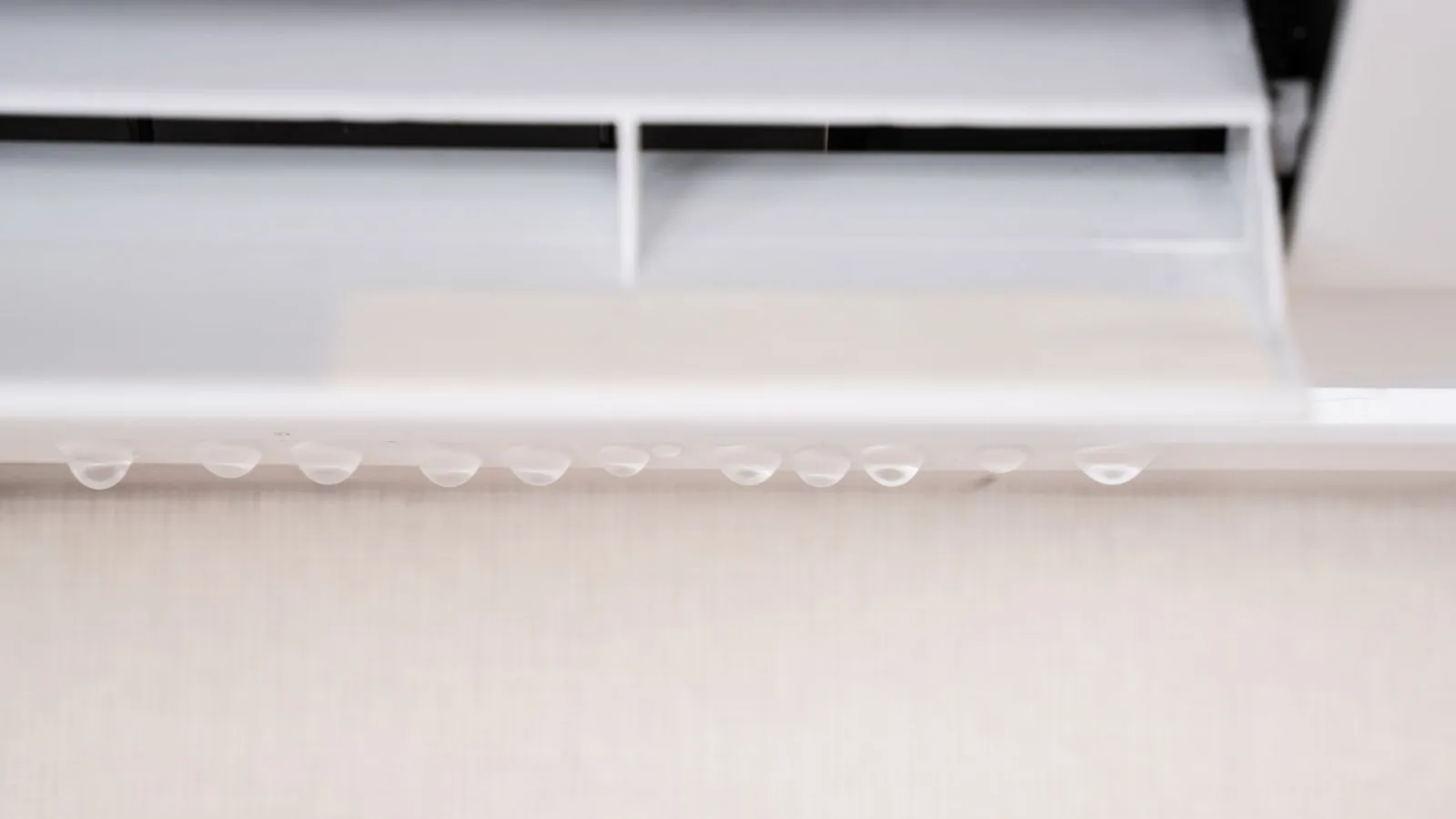
A damp patch on the ceiling, or a soft spot in a closet floor near the air handler, is often the first sign of AC leak water damage in Shirley, NY. It is the wet drywall, insulation, framing or flooring left behind when condensate from an air conditioner, air handler or mini split escapes its drain path. The leak is usually slow, so it can run for weeks before anyone sees it.
Switch the system off at the thermostat, set a pan under any drip, and keep furniture out of the wet zone. AC leak water damage repair starts with finding where the water actually travelled, because the stain is rarely right under the source. Call (934) 223-1875 and the dispatcher will ask what is happening and set up an inspection, which comes before any price is discussed.
How a cooling system ends up dripping indoors
Cooling air also strips humidity out of it. That moisture condenses on the cold evaporator coil, drips into a pan, and runs out through a drain line to the outdoors or to a drain. A mini split does the same job with a small hose that exits through the wall.
Every link in that path can fail. The line clogs with algae and sludge, the pan cracks or rusts through, a fitting works loose, or the coil freezes over and then thaws faster than the pan can handle. A dirty filter often causes the freeze, and a mini split hose that sags or kinks sends water back into the wall instead of outside.
Where the water lands, depending on the equipment
The location of the unit decides which part of the house gets wet. These are the patterns the crew sees most often when a condensate line backs up.
Air handler in the attic
Water soaks the insulation first, then drops through the ceiling drywall. It can run down to the hardwood floor in the room below and cup the boards.
Air handler in a closet
A wet spot appears on the closet floor and wicks into the base of the wall. Baseboards swell and paint bubbles low on the wall.
Wall-mounted mini split
Drips run down behind the unit and inside the stud bay. The room can look dry while the cavity behind the paint is wet.
Window or portable unit
An overflowing drain tank or tilted unit soaks the sill, the wall below it and the floor under the window.
Why older Shirley homes feel a leak sooner
The Shirley area was developed from the 1940s, when developer Walter T. Shirley sold about 4,000 four-room homes on small lots near Mastic Bay. In a compact house, a ceiling or wall is never far from the cooling equipment, so a modest leak reaches living space fast.
Because many homes here are older, ask the crew to check the supply lines, valves and wiring near the unit while the area is open. Water that has dripped near an outlet or junction box is also a reason to leave that circuit off until it has been checked.
Signs that point to the AC as the source
A roof or plumbing leak can leave the same stain on a ceiling. Match the timing: if the spot grows on hot days when the system runs and stalls when it is off, the cooling system is the likely source. The clues below help narrow it down.
| What you notice | What it often means | What to do next |
|---|---|---|
| Stain grows only while the AC runs | Condensate is reaching the ceiling or wall | Turn the system off and ask for moisture mapping |
| Water in or around the drain pan | Clogged line or overfull pan | Do not run the system until the line is cleared |
| Ice on the indoor coil or lines | A frozen coil that thaws and overflows | Run the fan only to thaw it, then call an HVAC contractor |
| Musty smell near a vent or closet | A slow seep that has stayed wet a while | Ask for moisture readings behind the surface |
| Mini split dripping at the wall | Kinked hose or blocked drain | Shut it off and catch the water |
How the crew dries and repairs the damage
The work follows the damage, not a template. Here is the usual order once the crew arrives.
Stop the water and trace the path
The crew confirms the system is off, then follows the water from the stain back to the pan, line or hose. Repairing the drain line or pan itself is an HVAC contractor's job, and the crew will say so plainly.
Map the moisture
Moisture meters check drywall, framing and subfloor. A thermal imaging camera shows cool, wet areas behind intact paint so nothing is guessed.
Remove what cannot dry
Saturated insulation and soft or sagging drywall are cut out. Material that reads dry stays in place.
Dry the structure
Air movers push air across surfaces and LGR dehumidifiers pull moisture out of the room. Wall cavities are opened or vented so the air reaches wet framing, which is the process described under structural drying and dehumidification.
Confirm and document
Readings are repeated until the materials reach their drying goal, and photos plus moisture logs are kept. The work follows the published ANSI/IICRC S500 water damage standard, and you can ask any company whether its crews do the same.
When the leak reached a wood floor or a closet
A condensate line that backed up can wet a ceiling and then the hardwood below it. Boards that stay damp swell, crown or cup, so quick drying matters, and the options for sanded or replaced boards are covered on the hardwood floor water damage repair page.
A closet that has stayed damp near the air handler deserves the same attention. Mold often follows a condensate leak, so fix the leak first and dry the area. Mold needs moisture to grow, testing and remediation follow the published ANSI/IICRC S520 standard, and any health question belongs with a physician. If growth is already visible, see mold remediation.
Preventing water damage from an HVAC system
Most of this damage is preventable with small habits. Change the filter on schedule, because restricted airflow is a common reason coils freeze. Have an HVAC contractor flush the condensate line at the start of the cooling season and check that the pan is clean and unrusted.
A float switch, which cuts the system off when the pan fills, is a small part compared with a soaked ceiling. Ask your HVAC contractor whether one is installed on your equipment. Look at where the drain line ends outside, since a line that never drips in summer can be a sign of a blockage.
What shapes the cost
An inspection or assessment comes first. The crew measures what is wet, then the scope and price are explained before any work starts, and they depend on the factors below. The dispatch line cannot quote a number over the phone because a damp ceiling tile and a soaked wall cavity are very different jobs.
A condensate line that backed up slowly is the kind of loss an insurer may question, while a sudden failure is more likely to be covered. Read your policy, ask which category your leak falls in, and keep the photos and readings the crew records.
- How many rooms and how much material is wet
- Whether insulation or drywall has to be removed and replaced
- How long the leak ran before it was found
- How many days of drying equipment it takes to reach the drying goal
- Access, such as a tight attic or a finished ceiling
Want your real number? Call the 24/7 line.
☎ (934) 223-1875Frequently Asked Questions
Yes. A mini split hose or a closet air handler can leak into the stud bay, where the paint hides the water. Moisture meters and a thermal imaging camera show whether the cavity is wet before anything is opened.
Look for a stain that grows on days the system runs and stops when it is off, a sagging patch of drywall, or a musty smell near a vent. Turn the system off and call for moisture mapping. The first stain is rarely directly under the source.
It depends on the policy. Whether a slow drain-line leak is covered is a question for your insurer, and dated photos help whichever way it goes.
No. Running it keeps adding water to the area. Turn it off at the thermostat, catch what is dripping, and have an HVAC contractor clear the line or repair the pan.
None in advance. Call (934) 223-1875 any time, the dispatcher asks what is happening, and a crew is sent the same day when available. No arrival time is promised because it depends on location and call volume.
It takes days, not hours, and the exact length depends on the materials and how long they were wet. The crew checks moisture readings during the job and stops equipment only when the materials reach their drying goal.
Yes. The dispatch line covers Shirley and nearby Suffolk County towns, including the Patchogue area. Call and give your address.