
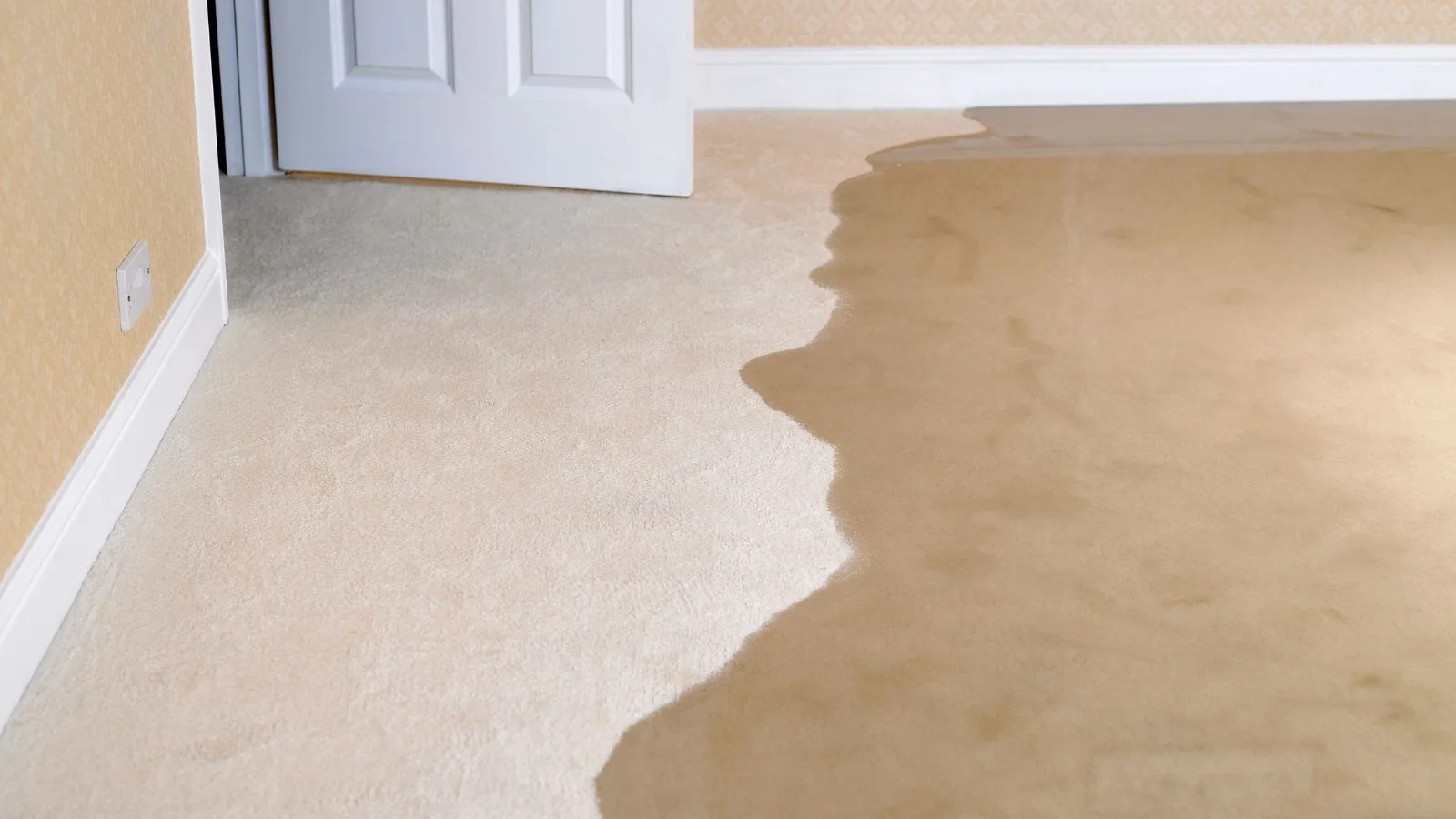
Carpet water damage restoration in Shirley, NY is the process of pulling water out of the carpet and pad, drying the floor under them, and deciding what can stay and what must go. The carpet fibers are rarely the problem. The pad underneath acts like a sponge, holds water for days, and the subfloor beneath it holds even longer.
The first thing the crew learns is where the water came from, because that decides everything else. Call (934) 223-1875 and the dispatch line will send restoration professionals to test the carpet, pad and subfloor. If the room still has standing water, water extraction comes before any drying equipment.
The source of the water decides save or replace
Restoration standards sort water into three categories by how clean it was when it came out of its source. The category matters more than how long the carpet sat wet, so the crew asks where the water came from first.
| Water source | Category | What usually happens to the carpet |
|---|---|---|
| Supply line, faucet, clean rainwater seen right away | 1 (clean) | Often extracted and dried in place if caught soon |
| Washer or dishwasher discharge, aquarium | 2 (gray) | Carpet may be cleaned and dried, pad is often replaced |
| Sewage, river or ground flood water | 3 (black) | Carpet and pad are usually removed |
| Any water that sat long enough to grow mold | Treated as worse than it started | Carpet and pad are usually removed |
Clean water ages quickly. Left on a pad for a couple of days it stops being category 1, which is why speed matters even for a tidy supply-line leak.
If the water came from a toilet or drain
Sewage is category 3 water and it does not belong in a carpet that anyone walks on. Keep children and pets off the floor, do not run a household vacuum on it, and do not try to clean it yourself. Read about sewage backup cleanup, then call.
Why the pad is the real problem
Carpet pad is made of foam or fiber, and it soaks up more water than the carpet on top. It dries slowly because the carpet sits over it like a lid. A carpet that feels only a little damp can have a pad that is completely wet.
Pad is also cheap compared with the carpet, so the crew will often remove and discard it even when the carpet is saved. The carpet is lifted from the tack strip, held up on a rack with air under it, and put back on new pad after the subfloor reads dry.
How a wet carpet is handled on site
The order below is the usual one. The crew adjusts it to what the readings show.
Extract
A weighted extraction wand pulls water from the fibers and the pad. A lot of water comes out in this step, and it is the biggest single gain in drying.
Test and categorize
A moisture meter reads the carpet, the pad and the subfloor edge. The crew confirms the source and the category.
Lift and remove the pad
The carpet is peeled back from one or more walls. Wet pad is cut out and bagged, and the carpet is raised on a rack or air mover.
Dry the room
Air movers push air under the carpet and across the subfloor while an LGR dehumidifier pulls moisture from the air. Readings repeat each visit.
Sanitize and deodorize
The carpet and floor are cleaned, and an air scrubber with HEPA filtration may run if odor or dust is a concern.
Re-lay or replace
If the carpet dries to standard, it is stretched back down on new pad. If not, a written scope lists the replacement area.
Wicking, odor and the brown stain on the wall edge
Water climbs. Wet carpet can pull moisture into the bottom of the drywall and the baseboard, and the stain you see at the edge of the room is that wicking at work. Check the base of the wall with a thumb, since soft drywall means more than a carpet job.
Odor follows moisture. A musty smell that returns after cleaning usually means the pad or the subfloor is still damp. Many homes in the Shirley area date from the 1940s onward, and older compact rooms hold smells in. Ask the crew to read the corners and the closet floors, since those spots dry last.
Mold in carpet from water damage
Mold needs moisture, and a wet pad provides it. Dark spots on the carpet backing, a smell under the rug or discoloration on the tack strip are reasons to stop and test before you scrub. Testing, a written plan and removal follow ANSI/IICRC S520, the published mold standard, and New York requires licensed professionals for projects over ten square feet.
Carpet with mold on it is usually removed, not cleaned. The full process is on the mold remediation page. Questions about health belong to a physician, not to the crew.
Wet carpet in nearby towns
The same dispatch line covers Yaphank and the rest of the South Shore. Homeowners there can see how local service is handled on the Yaphank page, and the carpet process is the same. Tell the dispatcher what the water was, because it changes the plan.
What shapes the cost of carpet work
Price follows the category of water, the area wet and the number of drying days the readings call for. Coverage for wet carpet depends on where the water came from. A sudden supply failure is often covered, a long-running leak often is not, and flood is usually excluded. Your insurer can confirm, and the crew's photos and readings back up the claim.
A site assessment is always the first step. The crew reviews the damage and records readings, and only then are scope and pricing laid out, shaped by the factors listed here.
- The category of water and whether the carpet can be cleaned
- How many square feet of carpet and pad are wet
- Whether the subfloor or tack strip is also wet
- How many days the drying equipment stays on site
- The cost of new pad, carpet or stretching afterward
Want your real number? Call the 24/7 line.
☎ (934) 223-1875Frequently Asked Questions
Often, if the water was clean and the carpet is dried soon. The pad is usually replaced. Water from sewage or a flood is different and the carpet is normally removed.
Surface moisture may be gone in a day or two, but the pad and subfloor take longer. The crew keeps drying until the readings reach a dry standard, not for a fixed number of days.
Mold needs moisture, so a pad that stays wet for days is the setup. Fast extraction and drying remove that moisture. No company can promise mold will never appear, and a smell that persists is a reason to get an assessment.
Not always, but often. If the water was clean and the pad is not saturated, it may be dried in place. Gray or black water, or a pad that has been wet for days, means removal.
The pad or the subfloor probably still holds moisture. Surface fans make the top feel dry while the lower layers stay damp. Ask for moisture readings of the pad and subfloor.
None. Call (934) 223-1875 any time, day or night. The dispatcher asks what is happening, and a crew is sent the same day when one is available. No arrival time is promised, because it depends on call volume and travel.
The carpet steps are the same, but a concrete slab holds water differently from a wood deck. The crew reads the slab with a meter and adjusts the drying time. A pipe leak in the slab is its own problem.