
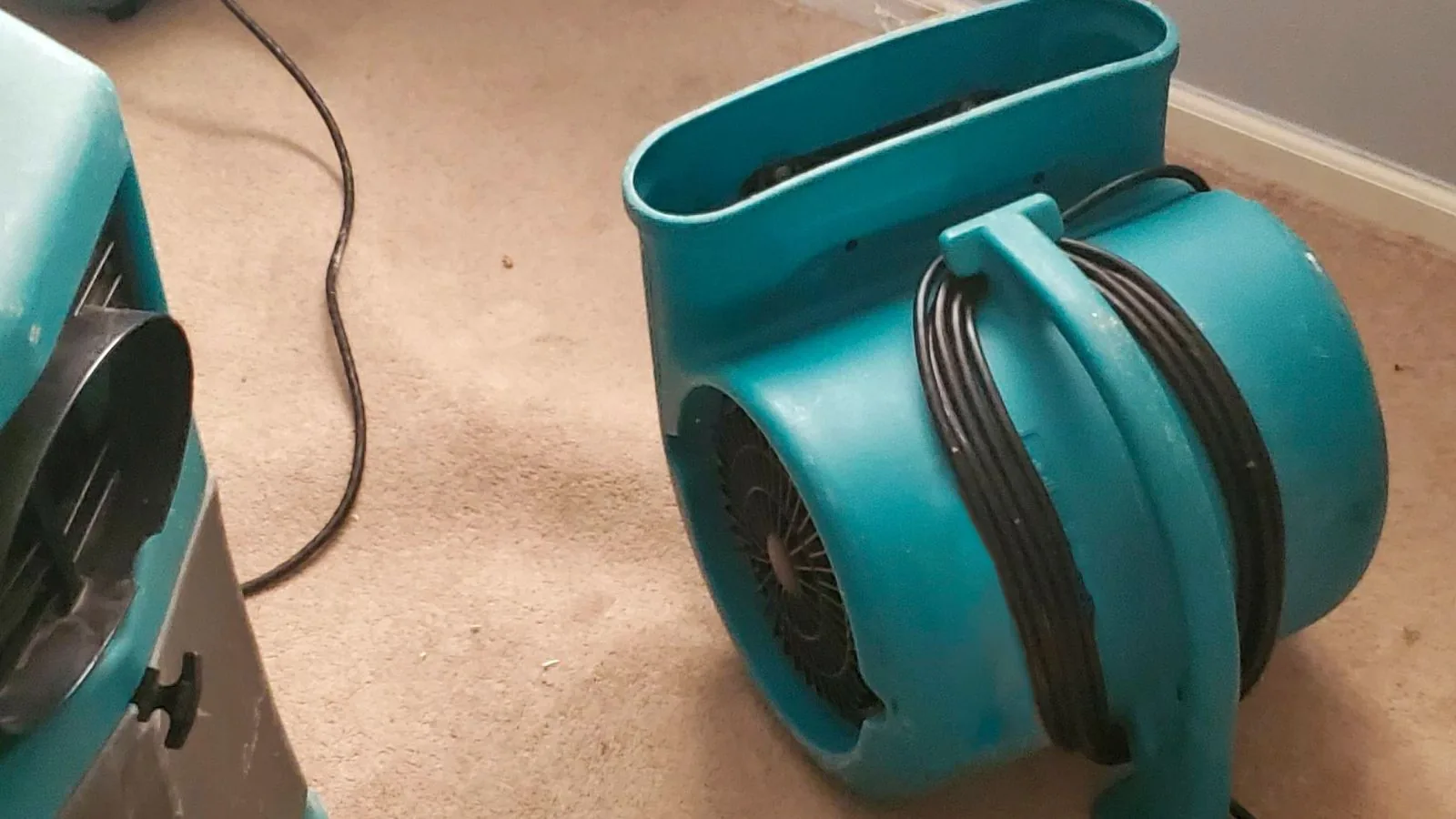
Structural drying in Shirley, NY is the controlled removal of moisture from walls, floors, framing and contents after water damage, using measurement and equipment instead of guesswork. Water drying services start by finding where the water went, which is not always where it shows. A floor that feels fine can sit on a wet subfloor.
Call (934) 223-1875 and the dispatcher will ask what happened and arrange an assessment. The assessment comes first, and the scope and price are explained before any work starts.
Walls that still feel damp, a musty smell days later, or floors starting to cup?
These are the signs that a cleanup stopped at the surface. Damp baseboards, a smell that returns after fans are turned off, paint that bubbles, and boards that begin to crown or cup all mean moisture is still inside the material. Water can stay in framing and drywall long after the puddle is gone.
That is the problem structural drying solves. The sections below explain what the crew measures, what each machine does, and when a job is considered finished.
Safety guidance before drying equipment arrives
Drying equipment is safe when the building is. Before the crew sets up, confirm that the source of the water is stopped, because an air mover on a running leak only spreads the problem. Keep people and pets out of rooms with standing water, and do not step into water near outlets, power strips or an electrical panel.
Do not run a household fan or space heater to dry wet walls on your own. Heat can push moisture deeper into framing, and a fan can spread contaminated water as mist. Leave wet drywall and insulation in place until the crew has taken readings, since the readings decide what can be dried and what has to come out.
How fast water moves into a building
On August 13, 2014, flash flooding broke New York State's 24-hour rainfall record with 13.78 inches, according to the Suffolk County hazard plan's Brookhaven section. That is a Brookhaven-wide figure, not a Shirley gauge, but it shows how quickly water can overwhelm drainage and soak into a structure. Know where your sump or floor drain goes, and call quickly when water has been in.
Water travels. It wicks up drywall, runs under flooring, drops into wall cavities, and soaks insulation. A small spill and a large flood differ in volume, not in the way drying has to proceed.
The tools and what each one tells you
Each piece of equipment has one job. Together they answer where the water is, how wet it is, and whether it is leaving.
| Tool | What it does | What it tells the crew |
|---|---|---|
| Moisture meter | Pins or pads read moisture in wood, drywall and concrete | How wet a material is, compared with a dry reference |
| Thermal imaging camera | Shows cool patches caused by evaporating water | Where to probe, and whether a wall cavity is wet |
| Air mover | Pushes air across wet surfaces | Speeds evaporation from walls, floors and cabinets |
| LGR dehumidifier | Pulls moisture out of the air even at lower humidity | Whether the room is shedding water or holding it |
| Hygrometer | Reads air temperature and humidity | Whether conditions allow drying to continue |
Moisture mapping water damage: how a job starts
Moisture mapping water damage means walking the property with meters and a thermal camera, then marking what is wet on a sketch of the floor plan. The crew also reads materials that are known to be dry, in an unaffected room, to set a reference for what dry looks like for that material.
This reference is the drying goal. Under the published ANSI/IICRC S500 standard, wet materials are dried back toward the reading of the same material in an unaffected area. The goal is a measurement, not a feeling, and you can ask any company whether its crews work to it.
What happens from setup to sign-off
Drying is a loop of setting up, measuring, and adjusting.
Remove standing water
Extraction comes first, covered on the water extraction page. Drying equipment cannot do the job of a pump.
Open and place
Wet baseboards may be removed and small holes cut so air reaches cavities. Air movers and dehumidifiers are placed to move air along wet surfaces and out of the room.
Monitor
The crew returns to read moisture meters and the hygrometer, moves equipment, and records the numbers in a drying log.
Adjust
If a wall stays wet, equipment is moved or an opening is made. If readings are flat, the plan changes.
Finish
Equipment is removed once the materials reach the drying goal and the log shows it. Photos and logs are kept for an insurer.
Drywall water damage: dry it or cut it out?
Drywall water damage depends on how long the board was wet and what the water carried. Clean water caught early often lets drywall dry in place. Board that has crumbled, sagged, or been in contact with sewage is removed. Insulation that has soaked is usually replaced instead.
For a wall that was opened and repaired, see wall and drywall water damage repair. The crew explains what is staying and what is going before it is cut.
Water mitigation, drying and repair are three stages
Water mitigation is the early stage that stops damage from growing. It includes shutting off the source, removing water, and starting equipment. Drying is the longer middle stage, and repair rebuilds what was removed.
Most of the trouble comes from skipping the middle one. A house that is repaired over wet framing can swell, smell, or grow mold later. S520 from ANSI and IICRC is the published standard for mold work, mold depends on moisture, and a physician answers health questions.
When wood floors begin to cup
Boards cup when the bottom absorbs more moisture than the top. A dehumidifier for water damage alone cannot fix a floor that has already deformed, and the room humidity matters. The crew checks the subfloor with a meter and a thermal camera before anyone decides what to sand or replace.
Floor-specific repairs are covered on the hardwood floor water damage repair page. Call the line if boards are lifting, because early drying can change the outcome.
What shapes the cost
Inspection and measurement come before a single tool is set up. You hear the scope and price before work begins, after the crew has measured the wetness, and the factors below set them. The dispatch line cannot give a number over the phone.
Drying logs are the part of a claim that shows the structure reached a dry standard. Sudden damage is often covered, gradual damage often is not, and flood is usually excluded, so ask your insurer and keep the logs, photos and written scope together.
- The size of the wet area and the materials involved
- How long the materials were wet before drying began
- How many pieces of equipment the job needs
- How many days of monitoring it takes to reach the goal
- Whether materials must be removed because of contamination
Want your real number? Call the 24/7 line.
☎ (934) 223-1875Frequently Asked Questions
The surface can dry while the board or framing stays wet. Moisture meters and a thermal camera show what is inside. A wall can need days of drying even when it looks fine.
Store equipment is built for the same job, but running it well takes measurement. Air movers push air across wet surfaces and dehumidifiers pull moisture out of the air. Drying time depends on the materials and how long they were wet, and it is measured in days. The crew sets up and monitors equipment as part of a job, with meter readings and drying logs.
It takes days, and the exact length depends on the material and how long it was wet. Hardwood, plaster and concrete dry more slowly than thin drywall. The crew keeps reading the meters and stops when the goal is reached.
Air movers and dehumidifiers make steady fan and compressor noise, similar to a large fan running in the room. The crew can explain placement before setup.
None in advance. One call to the 24/7 line gets a dispatcher asking about the source of the water, and then a crew is booked. No arrival time is promised.
It depends on the policy and the cause. Your insurer decides what it covers, and the moisture logs and photos are what it will ask to see.
Yes. The dispatch line covers Shirley and nearby Suffolk County towns, including the Yaphank area.