
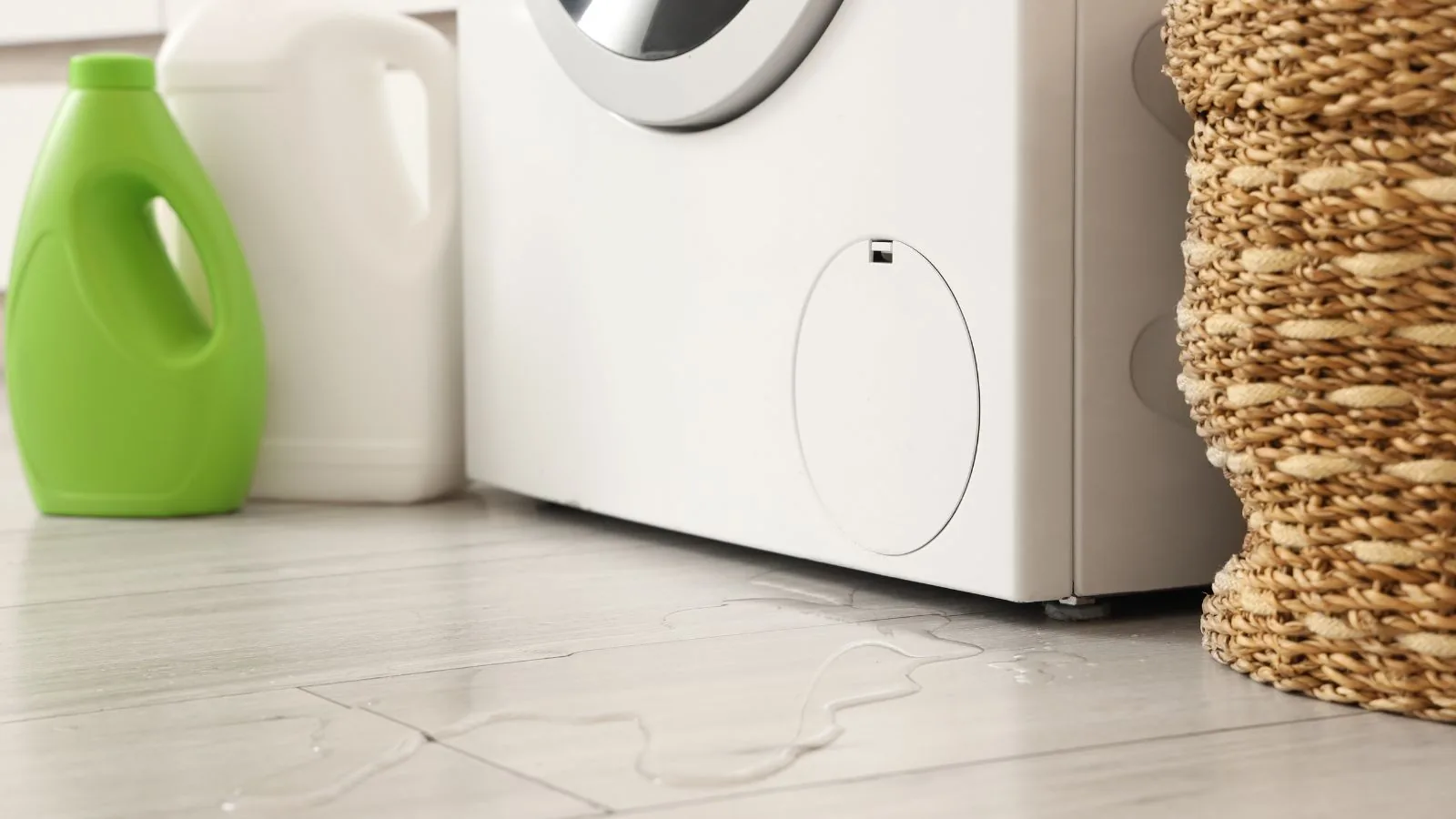
Appliance leak water damage in Shirley, NY often goes unseen because the hose, valve or line sits behind or under the machine. Pull the plug only if the outlet is dry, close the shutoff valve to the appliance, and if you cannot find it, close the main water valve. Call (934) 223-1875 and the 24/7 dispatch line sends a crew.
Appliance leak water damage is the wet flooring, cabinet bases and wall cavities left when a supply hose, drain line, ice maker line or seal fails. Move the appliance only if the floor is dry and you can do it safely. Keep power off to wet areas when you can reach the panel on dry ground, and keep people away from standing water.
Four appliance leaks the crew sees most
Most appliance floods start with a small part. These scenarios describe the usual patterns.
A washer supply valve that broke and ran unnoticed
The valve or hose behind the washing machine gives way while the family is at work or asleep. Water runs under the machine and across a laundry floor, then travels to rooms beside it. Cupped or lifting floors can follow, so see the hardwood floor water damage repair page.
A refrigerator ice maker line that dripped for weeks
A pinhole in the thin tubing behind the fridge leaks slowly and soaks the subfloor under cabinets. You may notice a musty smell or soft flooring before you see water.
A dishwasher that overflowed or leaked at the door
Water spreads across the kitchen floor and into the toe kick and cabinet base next to it.
A washer drain hose that slipped
Dirty wash water may run behind walls or into a floor drain. It is Category 2 water, so porous materials need more care.
When an appliance leak is an emergency
It is an emergency when water is still running, when it reaches outlets or the panel, or when it has soaked through a floor into the room below. A washing machine can pump a lot of water in a short time if a valve or hose lets go.
We take these calls at night, on weekends and on holidays, and a same-day visit is the normal goal. Appliance water soaks into subfloor, cabinets and trim, and these are the materials that cost the most to replace. Tell the dispatcher which appliance leaked and what rooms are next to it.
Where each appliance leak tends to hide
The location tells the crew where to look first. Use the table below to see what to check.
| Appliance | Common failure | Where water goes |
|---|---|---|
| Washing machine | Supply hose, valve, drain hose | Laundry floor, adjacent rooms, ceiling below |
| Dishwasher | Door seal, inlet valve, drain line | Kitchen floor, toe kick, cabinet base |
| Refrigerator | Ice maker or water filter line | Subfloor under and behind the unit |
| Under-sink units | Fittings and filter housings | Cabinet floor, wall base |
Take a photo of the appliance, the hose or valve and the wet area before anything is moved. For work in the kitchen, the kitchen water damage restoration page covers cabinets, counters and flooring.
From the call to dry floors
Appliance leaks often spread farther than they look. The work follows a set order.
Stop the supply
The crew confirms the appliance valve or the main valve is closed.
Remove the water
Wet vacuums and extraction units clear the floor. Wand tools work carpet and pad.
Look behind and beneath
Moisture meters and a thermal imaging camera map the wet area behind the appliance and under cabinets.
Dry what stays
Air movers and LGR dehumidifiers dry the subfloor and cabinets, following ANSI/IICRC S500. Drying under cabinets may require small access holes.
Document the loss
Photos, readings and a written scope support an insurance claim.
Plugs, outlets and cords
Appliances plug in at floor level, and water pools there. Do not unplug a machine while standing in water, and do not touch a wet outlet. If the cord is wet, leave it and turn off power only if the panel is reachable and dry.
Older kitchens and laundry corners
The Shirley area was developed from the 1940s with about 4,000 four-room homes on small lots near Mastic Bay. Many homes are older and compact, with laundry and kitchen appliances packed into tight spaces. Older supply lines, valves and wiring deserve a look after a leak, so ask the crew to check them. Do not assume the valve you can see is the only weak point.
Compact layouts also mean water finds a neighbor quickly, whether it is a hallway, a bedroom closet or a room below.
Check your policy before it happens
Appliance overflows are often treated as sudden and accidental, but water that backs up through a drain may be treated differently. The New York Department of Financial Services says a typical homeowners policy does not cover flood damage, and that coverage for water backup and sewage may come from an endorsement. Read your policy for water backup coverage before a loss, not after.
File as soon as possible after a loss and document damage before cleanup. New York regulations set timelines for insurers to acknowledge and answer claims. Ask your insurer which parts of your policy apply to a leaking appliance.
Crews also work near Patchogue, so give your full address when you call.
What affects the cost of appliance leak cleanup
The cost depends on how long the leak ran and where the water went. Appliance hose failures that happen suddenly are often covered, and a leak that went unnoticed for weeks often is not. Your insurer decides, so read the policy and keep the photos, readings and scope the crew writes up.
Assessment comes first. The crew inspects the damage and takes moisture readings, then explains the scope and the price before any work starts. The final figure depends on the factors listed here.
- Duration of the leak, from a sudden burst to a slow drip
- Flooring type, cabinets and the number of rooms reached
- Whether water went into walls or the ceiling below
- Access behind appliances and under cabinets
- Equipment and days needed to dry
Call (934) 223-1875 and describe the appliance.
Want your real number? Call the 24/7 line.
☎ (934) 223-1875Frequently Asked Questions
Yes. The dispatch line is open 24/7, including nights, weekends and holidays. We do not promise an arrival time. Tell the dispatcher which appliance leaked, whether water is still running and which rooms are wet.
None. Call the 24/7 line and the dispatcher asks what is happening, then sends a crew for a same-day response when one is available. We do not promise an arrival time, because traffic, weather and call volume change it.
Supply water is clean at first, but drain water is dirty. Water that has crossed a floor may carry bacteria. The crew treats drain water as Category 2 or worse.
Sudden and accidental damage is often covered. Slow leaks and neglect often are not. A water backup endorsement may matter if water came through a drain. Check your policy.
Often yes. Moisture meters and a thermal imaging camera show wet areas without opening the floor. If water is under cabinets, small access holes may be needed.
Not always. Early drying can save many floors, while long-soaked subfloor and cabinet bases may need removal. The crew will show you readings and explain.