
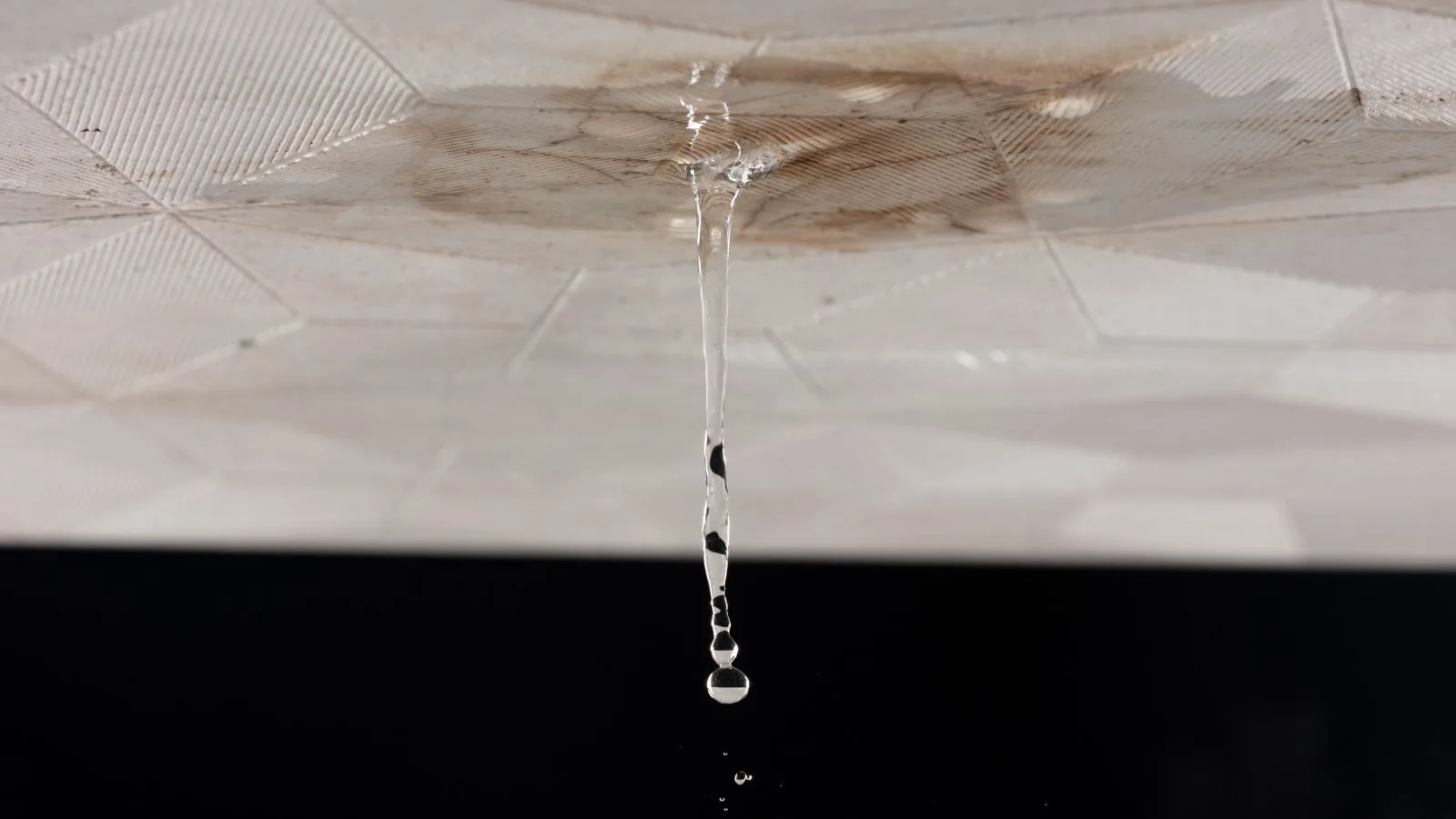
Ceiling water damage repair in Shirley, NY starts with the water you cannot see, because a stain on drywall means a pocket of water, wet insulation or a wet joist bay sits above it. If the ceiling is sagging, drips or bulges, keep people out from under it, move furniture aside and set a bucket below any drip. One call to (934) 223-1875 puts the dispatch line to work arranging a crew.
Ceiling water damage is the staining, softening and sagging of a finished ceiling caused by water from a leak above it, whatever the source. If the leak is plumbing, close the main water valve. Do not touch light fixtures or switches in a room with a wet ceiling, and shut off power to that area only if you can reach the panel while standing on dry ground.
Find your ceiling in this list
Ceiling leaks tell different stories depending on where they show up. The table below matches the common sights to what is usually behind them.
| What you see | What is often above it | What to do now |
|---|---|---|
| Wet spot on an upstairs closet or bedroom ceiling | Roof leak, or a line in the attic or a wall | Move items out, check the attic if it is safe, call |
| Stain below a bathroom | Tub, shower, supply line or toilet seal above | Close the main valve if water is active, call |
| Fresh drip from the ceiling or attic hatch | Active leak, roof or plumbing | Bucket below, keep out from under it, call now |
| Soft or sagging spot | Water trapped in the drywall | Do not push on it, keep people away, call |
| Corner where wall meets ceiling by a shower | Failed shower valve, tile or pan | Stop using the shower, call |
| Stain on a finished basement ceiling | Upstairs toilet or tub leaking through the floor | Stop using the fixture, call |
Six ceilings and what each one usually means
The six sights above are the ones dispatchers hear most. Here is how the crew reads each one.
A wet spot on an upstairs closet or bedroom ceiling
If it only shows after rain, the roof or flashing is the first suspect. If it shows on a dry day, look at supply lines and the HVAC condensate line in the attic. The crew checks with a moisture meter and thermal imaging camera to see how far the wet area goes.
A bathroom ceiling stain
A ring or brown stain below a bathroom often traces to a shower pan, a tub overflow or a supply line. Stains that spread slowly over weeks point to a slow leak. A sudden dark patch points to a failed connection.
An attic or ceiling that just started dripping
A fresh drip is an active leak. Place a bucket, move belongings and shut off the main valve if you suspect plumbing. If you can reach the attic safely, look for a wet spot, but do not step between joists.
A soft spot where a hole may be forming
Drywall that feels spongy is holding water and can break. Keep people out from under it. The crew may make a small controlled opening to let the water out, which is safer than letting it fall on its own.
The corner where wall meets ceiling by a shower
This spot gets splash and steam, and tile or caulk failure lets water behind the wall. The damage often shows as peeling paint or a dark corner. It can mean wet framing, so the crew checks the wall as well.
An upstairs toilet leak that stained a finished basement ceiling
Water travels down through the floor, the joist bay and the ceiling below. The stain can be far from the toilet. Because toilet water can be contaminated, ask the crew about the category before anything is touched. The basement water damage cleanup page covers the lower level.
When a wet ceiling is an emergency
It is an emergency when the ceiling sags, bulges or drips, when water is near a light fixture, or when the leak has not stopped. A bulge can hold gallons and fail without warning.
Night, weekend and holiday calls are taken, and the aim is a visit the same day. A wet ceiling can let go in the middle of the night, so do not wait for morning if you hear dripping and the stain is growing. Say on the call where the stain is and whether the leak is still active.
Roof leak water damage that shows up on the ceiling
Roof water damage rarely appears at the spot where the roof leaks. Water follows the rafters and insulation, then shows up on a ceiling several feet away. That makes roof leak water damage easy to misread, and it is why the first look includes the attic.
Typical signs are a stain after wind-driven rain, a musty smell in the attic, or damp insulation near the eaves. Take photos of each stain with the date, since the pattern helps the crew and your insurer.
Water damage from a roof leak is wet insulation, stained decking and a soaked ceiling below. The crew dries and repairs the interior damage. A roofer repairs the roof itself, since roof water damage repair and roof repair are separate trades.
NOAA normals for the Islip airport station show about 46 inches of precipitation a year. On January 10, 2024, National Weather Service totals included 2.33 inches at the Shirley Airport station. After a rain like that, look at the ceilings under your roof and check the attic if it is safe to enter.
How the crew repairs a wet ceiling
The work runs in this order, so the ceiling is not closed over a wet cavity.
Control the water
The crew relieves trapped water from a sagging ceiling by making a small opening, with a bucket and plastic below.
Find the source
Moisture meters and a thermal imaging camera trace the water to the leak, in the attic, the wall or the floor above.
Remove wet materials
Soft drywall and saturated insulation are cut out. Dry sections stay if readings allow.
Dry the cavity
Air movers and LGR dehumidifiers dry the joists and framing, following ANSI/IICRC S500.
Prepare for repair
Once readings are normal, the ceiling is ready for drywall, texture and paint. Repairs are a separate step. See wall and drywall water damage repair for what that includes.
Ceiling hazards
Water near light fixtures, ceiling fans and wiring is a shock risk. Do not switch them on. If water is dripping through a fixture, shut off power to that circuit only if the panel is dry and easy to reach. Otherwise stay out and call.
Why a dry-looking ceiling can still be wet
A ceiling can look repaired and still hold moisture above it. Wet insulation and joists stay damp for days, and moisture is what mold needs. Mold testing and remediation follow the S520 standard, and health questions belong to a physician. Structural drying and dehumidification covers how that hidden moisture is brought down.
Many homes in the Shirley area are older, since the area was developed from the 1940s, with about 4,000 four-room homes sold on small lots near Mastic Bay. After a ceiling leak in an older home, ask the crew to check nearby wiring and supply lines.
Crews also reach customers near Yaphank.
What affects the cost of ceiling water damage repair
The cost depends on how much of the ceiling and cavity is wet and what the water passed through. Sudden and accidental water damage, including a burst line, is often covered. Gradual leaks and neglect often are not. Check your policy or ask your insurer. Photos, readings and a written scope are things an insurer may request, and we help assemble them.
Assessment comes first. Moisture readings come first, and then the scope and price are explained before anything is started. The factors in this table decide the final number.
- Size of the wet area and how many ceilings or rooms are involved
- Whether the source is plumbing, roof or HVAC, and whether it is still active
- Insulation, drywall and framing that must be removed or dried
- Access to the attic or joist bay
- Equipment and drying days needed before repairs
Call (934) 223-1875 and tell us what the ceiling looks like.
Want your real number? Call the 24/7 line.
☎ (934) 223-1875Frequently Asked Questions
Yes. Nights, weekends and holidays are covered, because the dispatch line never closes. We do not promise an arrival time. Tell the dispatcher where the stain is, whether it is dripping and whether you know the source.
None. The dispatcher on the 24/7 line gets the details of the loss and books a crew, with same-day service when available. Nobody can fix an arrival time in advance, because it depends on traffic, conditions and the day's call load.
Only if it is an immediate danger and you can do it safely, with a bucket below and clear of fixtures. Safer is to keep people away and call so the crew can relieve it in a controlled way.
The crew dries and prepares the interior. A roofer repairs the roof. Call both if the leak came from above.
Paint over a wet ceiling traps moisture. Wait until the cavity has been dried and tested, then paint.
It depends on the cause. Sudden and accidental damage is often covered, while gradual leaks and neglect often are not. Check your policy and ask your insurer.