
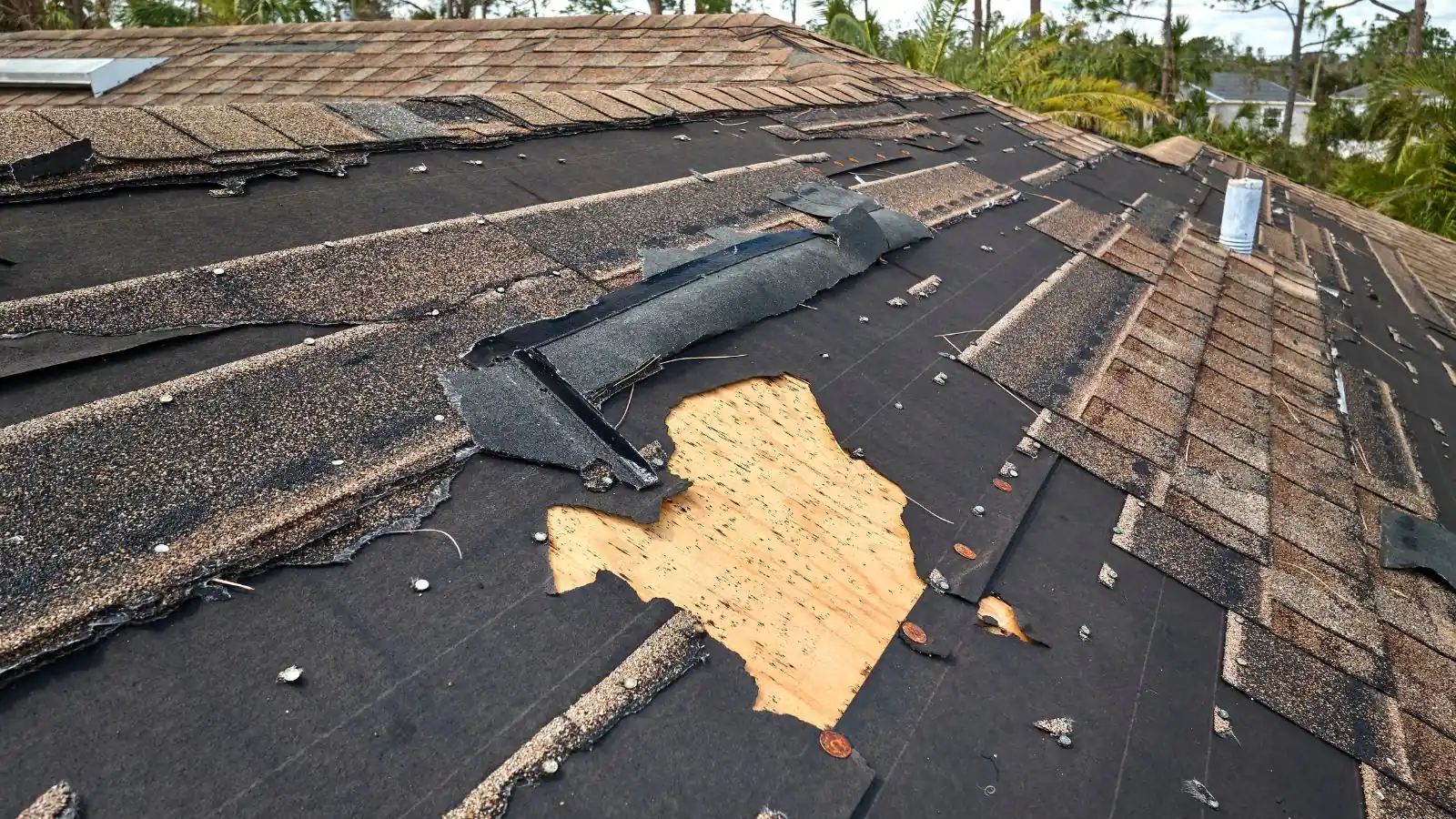
Storm water damage repair in Shirley, NY deals with rain that a storm drives through the building envelope: around windows and doors, under siding, past flashing, and through vents or a damaged roof edge. Water damage due to rain is urgent, because wet insulation and drywall keep absorbing after the storm passes. Dispatch is open 24/7.
While you wait, set buckets under drips, move furniture and valuables away from wet walls, and keep people out of rooms with sagging ceilings. Kill power to a wet area only if the panel is reachable without stepping in water. Call (934) 223-1875 and the dispatcher will ask what you see.
When storm water is an emergency
It is an emergency when water is still coming in, a ceiling is bulging, or water is near outlets and light fixtures. It is also urgent when insulation is saturated or a window has failed and the opening is exposed to the next band of rain. Same-day crews are sent when available, nights and weekends included.
Roofing, windows and siding belong to a licensed contractor. Ask the crew whether temporary covering of an opening is part of the visit, and call a roofer for the permanent repair. The restoration side is about the water already inside.
How wind-driven rain finds its way inside
Rain that falls straight down meets shingles and siding. Rain pushed sideways by wind meets every seam, and these are the entry points the crew finds most often.
Window and door frames
Wind pushes water past worn caulk and weatherstripping. It collects in the sill and runs down inside the wall.
Siding and flashing
Water gets behind loosened siding or a torn flashing and soaks the sheathing and wall insulation.
Vents, chimneys and roof edges
Gaps around penetrations let water into the attic or along the eave, where it can reach the ceiling below.
Garage door and overhead openings
Gusts push rain under a garage door and into attached rooms or stored belongings.
What recent storms show about Shirley
The Shirley Airport station logged 2.33 inches in 24 hours on January 10, 2024, according to the National Weather Service. Even a 2 inch rain on saturated ground and a high tide can push water into low rooms, so check basement and ground floor spaces after such storms.
On August 13, 2014, flash flooding broke New York State's 24-hour rainfall record with 13.78 inches, a Brookhaven-wide figure and not a Shirley gauge. Heavy rain can overwhelm drainage quickly, so know where your sump or floor drain goes.
Storm water, flood water and a plain roof leak
Storm water damage means rain that entered through the building. Floodwater rises from outside and enters at ground level, and the flood damage restoration page covers it. A single stain under one roof spot is a roof leak, handled on the ceiling water damage repair page.
A storm can cause all three at once. Tell the dispatcher what you saw, since floodwater can carry contamination and rain through a wall usually does not.
Which kind of loss is it?
The question that sorts them is where the water came from. This table helps you describe it on the phone.
| What you saw | Likely kind of loss | What follows |
|---|---|---|
| Water at a window, siding, or vent | Wind-driven rain | Extraction, moisture mapping and drying of wall and insulation |
| Water rising at the door or from the ground | Flood | Flood response, and a check of coverage and contamination |
| One stain below a shingle area | Roof leak | Ceiling work and roofer repair |
| Sagging ceiling with water above | Roof or attic leak | Controlled release and drying |
What the crew does after a storm
The goal is to find all the water, including the water inside walls.
Locate entry points
The crew traces water from the stain to the opening it used and notes it for the roofer or contractor.
Remove water
Extraction units clear standing water. See water extraction for the equipment.
Map hidden moisture
Moisture meters and a thermal imaging camera find wet insulation and wall cavities that look dry.
Remove and dry
Wet insulation and soft drywall come out. Air movers and LGR dehumidifiers dry the structure until readings reach the drying goal.
Document
Keep photos, moisture logs and the written scope together in one folder. Ask any restoration company whether it works to ANSI/IICRC S500, the published standard here.
Electrical and structural cautions
A ceiling that holds water can fall without warning, so stay out from under bulges. Do not use fixtures or outlets that are wet. If a tree or line is down, or you smell gas, leave and call 911 or the utility before calling the restoration line.
Look up your address before the next storm
Sandy's 2012 landfall left about 2,400 damaged structures in the Town of Brookhaven. Because the Suffolk County plan shows those properties sat largely inside FEMA flood areas, it is worth checking your address on the FEMA map and the county GIS layers before you decide on coverage.
Water that rises from the ground is flood, and a typical homeowners policy does not cover it. Coverage for wind-driven rain differs, so read the policy before a storm.
What shapes the cost
An assessment of the damage comes ahead of any work. Measuring the moisture comes first, then scope and price are explained, both driven by the factors in the table below.
Sudden and accidental storm damage is often covered by a homeowners policy, while neglect or slow leaks often are not. Flood damage is usually left out of a standard policy and calls for its own flood coverage. Check your policy, ask your insurer, and document damage before cleanup. A set of photos, readings and a written scope is something the crew can provide.
- How many rooms, walls and ceilings took in water
- Whether insulation and drywall must come out
- How long the water sat before it was found
- How many days of drying equipment it needs
- Whether the opening needs temporary protection
Want your real number? Call the 24/7 line.
☎ (934) 223-1875Frequently Asked Questions
Yes. There are no off hours on the dispatch line, so a late call is answered like an early one. Call (934) 223-1875, say where the water is coming in, and a crew is sent the same day when available. No arrival time is promised.
None in advance. Reach the 24/7 line, explain the damage, and the dispatcher schedules a visit, the same day when it can. No arrival time is promised.
It depends on the policy and the cause. Storm water is where the flood exclusion matters most. Wind-driven rain through a damaged roof is treated differently from rising water, so read the policy, speak to your insurer, and photograph the damage before cleanup.
Yes. The crew can take moisture readings and photos and write a scope of what is wet. This gives you documentation to share with your insurer in general terms.
The restoration crew handles the water, and the opening is repaired by a roofer or contractor. Ask whether temporary covering is part of the visit.
A wall may look fine while the cavity stays wet. Moisture meters and a thermal camera find it. A musty smell or paint that bubbles days later suggests moisture is still there.
Yes. The dispatch line covers Shirley and nearby Suffolk County towns, including Mastic Beach.