
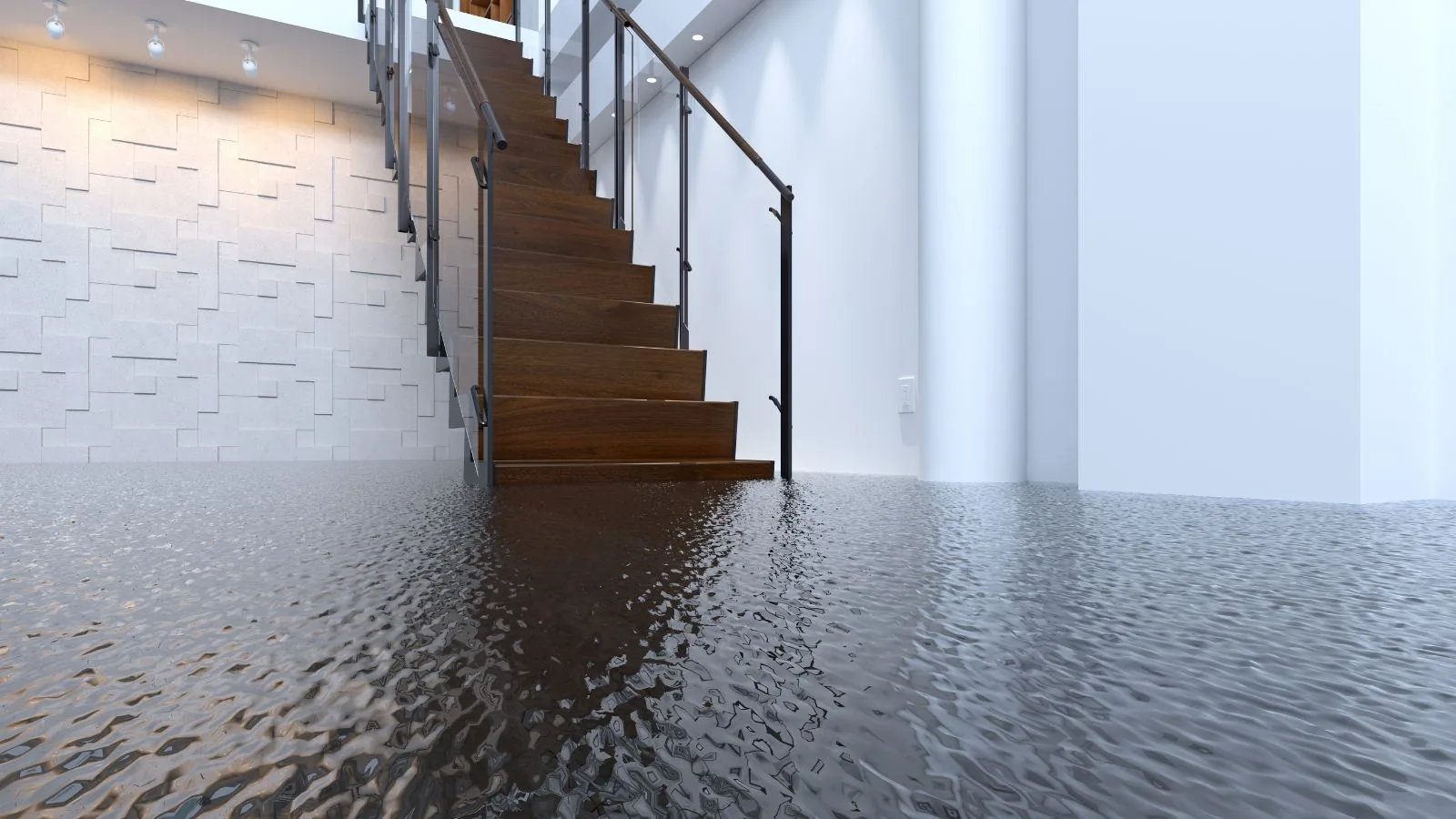
Basement water damage cleanup in Shirley, NY means pumping out standing water, removing what the water ruined, and drying the walls, slab and framing until readings come down. If you have water below grade right now, call (934) 223-1875, because the dispatch line is open 24/7. While you wait, stop the source if you can, shut off the main water valve if a pipe is running, and keep everyone out of the water.
Lift valuables to shelves or upstairs. Turn off power to the wet area only if you can reach the panel while dry, and otherwise stay out of the room. Take photos from the stairs before anything moves, since those pictures help with an insurance claim later.
When standing water in the basement is an emergency
Treat it as urgent when water covers the floor, when it is rising, or when it touches outlets, the furnace, the water heater or the panel. Treat it as urgent too if it smells like sewage, because that is a different kind of water. Even a few inches can soak drywall, stored boxes and carpet within a day.
A damp wall with no pooled water gives you a little more time, but not much. A same-day call is the right move, because wet drywall and insulation stay wet in a closed room. The dispatcher asks what is happening and sends a crew the same day when one is available. No arrival time is promised.
Where basement water comes from
The source decides the plan, so the crew asks first. Most calls fall into one of four groups.
Sump pump failure
The pump stops during a storm or a power outage, or the float jams. The pit fills and water spills across the floor.
Seepage through walls or the floor joint
Groundwater pushes through cracks or the seam where the wall meets the slab. It shows as dark streaks and a wet line at the base.
Rising water
Saturated ground and a high water table raise water through floor drains or the slab. It can come with storm surge or heavy rain.
Plumbing in the basement
A burst supply line, a failed water heater or a washer valve floods the room from inside. See water heater leak cleanup for that case.
Why the ground and weather matter here
Superstorm Sandy in 2012 damaged about 2,400 structures in the Town of Brookhaven, according to the Suffolk County hazard mitigation plan, and the flooded properties very closely followed the flood areas on FEMA flood maps. Look up your address on the FEMA flood map and in the Suffolk County GIS flood layers before you decide on coverage.
On August 13, 2014, flash flooding broke the New York State 24-hour rainfall record with 13.78 inches, a Brookhaven-wide figure and not a Shirley gauge reading. Know where your sump or floor drain discharges, because heavy rain can overwhelm drainage quickly. On January 10, 2024, the National Weather Service recorded 2.33 inches over 24 hours at the Shirley Airport station. After a storm like that, check basement and ground-floor spaces even if the street looks dry.
Much of western Shirley lies in the Wertheim National Wildlife Refuge area, and the Carmans River runs through the refuge. Homes near wetlands and rivers should check the FEMA flood map first.
What the crew does in a flooded basement
The sequence below is the usual one. Conditions change the order.
Check safety
The crew looks for energized equipment, gas appliances and signs of sewage before stepping into the water.
Pump and extract
Submersible pumps move deep water, then extraction units pull what remains from the slab and the carpet.
Sort the contents
Items are separated into dry, wet but savable and discard. Photos are taken for the record.
Remove wet materials
Wet carpet, pad and the lower part of drywall are cut out if they cannot dry in place.
Dry the structure
Air movers and LGR dehumidifiers run with moisture readings taken each visit. See structural drying for how that is done.
Write the scope
A written scope with photos and moisture readings lists the repairs needed.
Electricity, gas and sewage in a flooded basement
Do not wade into standing water if an outlet, a power strip or the panel may be live. Do not run a household vacuum on the water. If it came up through a floor drain or smells like sewage, treat it as contaminated, keep people and pets out, and read about sewage backup cleanup.
Finished basement contents: keep, dry or discard
What happens to your things depends on the material and the water. This table is a rough guide.
| Item | If clean water | If sewage or flood water |
|---|---|---|
| Concrete floor and block walls | Dried and cleaned | Cleaned and disinfected |
| Drywall and insulation | Cut out if wet more than a short time | Removed |
| Carpet and pad | Pad usually removed, carpet may be dried | Removed |
| Solid wood furniture | Often dried and kept | Cleaned if possible or discarded |
| Particleboard furniture | Usually discarded | Discarded |
| Cardboard boxes and books | Often discarded | Discarded |
Photos and documents can often be frozen and dried later if you act quickly. Ask the crew before you throw them out.
After-hours basement calls and the days after
Basements flood at night because storms do, and the dispatch line is built for that. A call at two in the morning is handled the same way as a call at noon, with the same questions about the source and the water. A crew goes out the same day when available, and extraction usually leads to a drying plan the next day.
Neighbors from Mastic Beach to nearby hamlets use the same line, and the Mastic Beach page explains how service reaches that area. For flood-level events that go beyond one room, flood damage restoration covers the larger job.
Before you flush or run anything after a flood
The Suffolk County Water Authority supplies public water to much of Suffolk County, and many homes use a private well instead. Know which one you have before anyone flushes a system after flooding. For private well questions, the Suffolk County Department of Health Services is the office to ask.
Floodwater can also reach a well, and a flooded water heater or well pump needs to be looked at before it is turned back on.
What shapes the cost of a basement cleanup
Price follows the depth and category of water, the area affected and how much of the finish is wet. Insurers sort basement water by cause. Sudden and accidental events are often covered, gradual seepage often is not, and flood generally calls for separate flood coverage. Check the policy first, and the crew will provide the photos, readings and written scope.
The inspection comes before everything else. The crew looks at the damage and takes readings, then the scope and pricing are explained before any work starts, and both depend on the factors listed here.
- The depth of the water and whether it is clean, gray or sewage
- How much of the basement is finished with drywall, carpet or trim
- The number of days of drying equipment needed
- Whether contents must be moved, sorted or hauled away
- Access, such as stairs and a bulkhead, for pumps and equipment
Want your real number? Call the 24/7 line.
☎ (934) 223-1875Frequently Asked Questions
Yes. The dispatch line at (934) 223-1875 takes calls 24/7, including nights, weekends and holidays. The dispatcher asks about the source and the depth, and sends a crew the same day when one is available. No arrival time is promised.
Stop the source if it is a pipe, shut off the main water valve and keep everyone out of the water. Lift valuables, turn off power to the wet area only if you can reach the panel dry, and photograph the room from the stairs. Then call.
Get out of the water, unplug the pump only if it is dry and safe to reach, and call. The crew pumps out the basement and checks the walls and floor for moisture. Ask an electrician or plumber to replace the pump.
None. Call any time and the dispatcher asks what is happening, then sends a crew the same day when one is available. No arrival time is promised.
Not necessarily. Floodwater and anything from a drain can carry contamination, and water near electrical equipment can be live. Stay out, and let the crew assess it.
No. Restoration removes water, dries the structure and repairs damage, but it does not stop groundwater from entering again. Foundation waterproofing is a separate trade, and the crew can tell you if the readings point to a recurring entry.
Mold needs moisture, and a closed basement holds it. Fast pumping and drying remove that moisture. If you see spots or smell mustiness, see mold remediation. Health questions belong to a physician.