
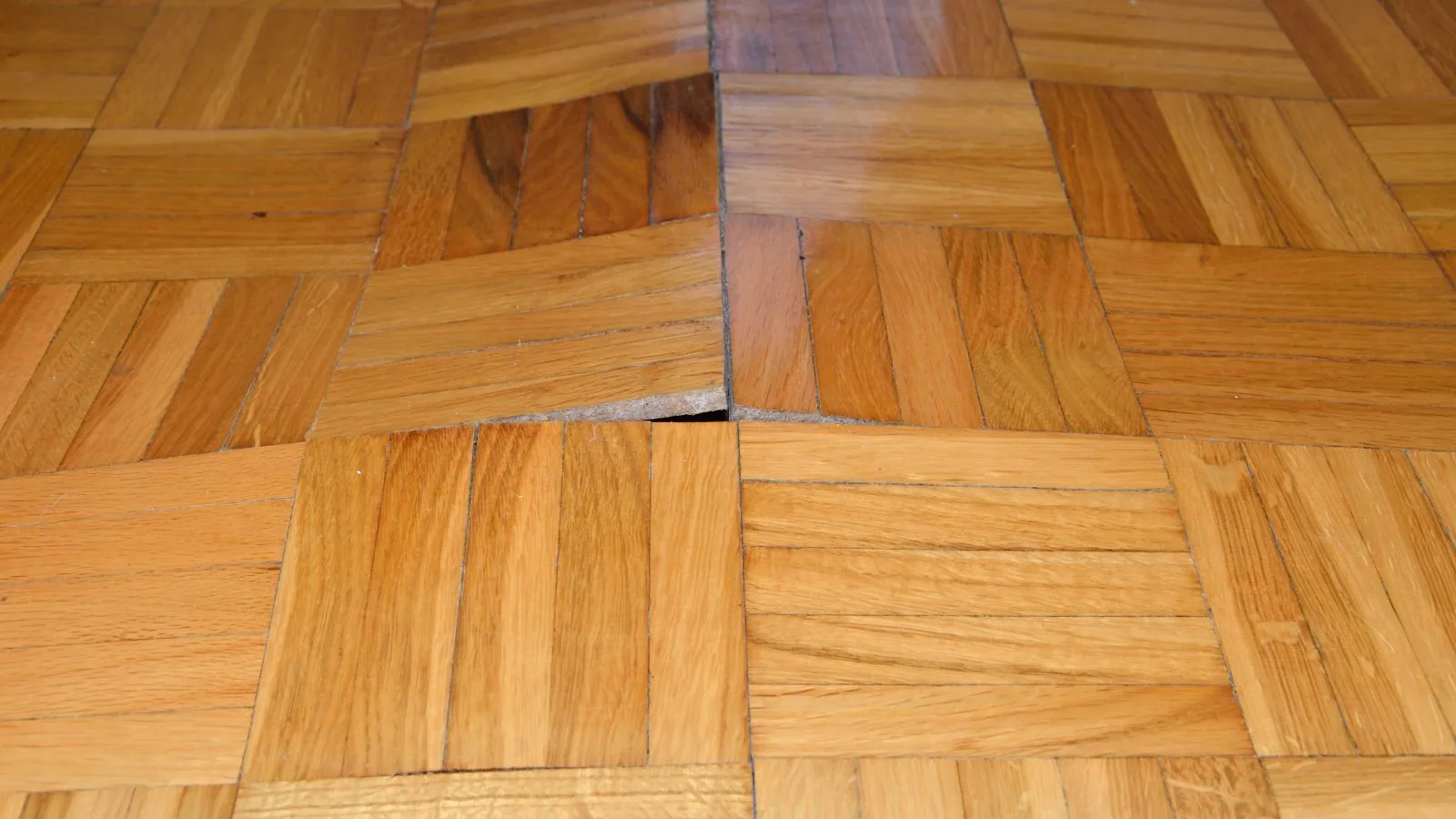
Hardwood floor water damage repair in Shirley, NY starts with one question: is the wood only wet, or has it already changed shape? Wood floors absorb water through the seams and the underside, so a floor can look fine on top while the boards soak below. Wood, engineered and laminate flooring all react, but at different speeds and with different odds of recovery.
The earlier a floor is dried, the better its chances of lying flat again. Call (934) 223-1875 and the dispatch line will send restoration professionals to measure the boards and the subfloor before deciding anything. If standing water is still on the floor, water extraction comes first.
Reading the boards: cupping, crowning, buckling and gaps
The shape of the damage tells the crew where the moisture sits and how long it has been there.
Cupping
The edges of each board rise higher than the center. It usually means more moisture is under the floor than on top.
Crowning
The center rises and the edges sit lower. It can appear after a cupped floor is dried or sanded too soon.
Buckling
Boards lift off the subfloor, sometimes in a ridge. This is the most serious sign and often means replacement.
Gapping
Seams open between boards after the wood dries and shrinks. Some gaps close again with the seasons.
Staining
Dark patches at seams or nail holes point to water that stayed for days. Surface stains alone do not show how wet the wood is.
One note on timing: wood needs days to show its full reaction. A floor that looks fine on day one can start cupping by day four, which is why readings matter more than looks.
Floors that need drying after a hidden leak
Two causes show up again and again in wood floor calls. Each leaves the same pattern of curled boards, but the repair starts at a different place.
Cupping after a condensate line backed up
A clogged air conditioner drain line can overflow slowly near the air handler and soak the boards around it. The cupping often appears in a band along one wall or hallway. The line must be cleared first, and the AC leak page covers that side of the problem.
Hardwoods dried after a washer valve broke
A split washer valve or hose can put water across a laundry room floor and under the neighboring boards in minutes. Species does not matter here. Walnut, oak and maple all take on water the same way. The machine side is covered under appliance leak cleanup.
Cupping may flatten after drying, but sanding or replacement is decided only after moisture readings show the wood has settled. Homes in the Mastic Beach area and the rest of the South Shore reach the same dispatch line.
Solid, engineered and laminate floors compared
The same spill does very different things to each flooring type. This table shows what the crew usually finds.
| Floor type | How it reacts to water | Typical outcome |
|---|---|---|
| Solid hardwood | Swells and cups, can recover if dried fast | Often dried and kept, sanding later |
| Engineered wood | Top layer lifts or delaminates at the edges | Dry quickly, otherwise replace |
| Laminate | Fiberboard core swells and does not shrink back | Usually replaced once edges swell |
| Floating floors on pad | Water collects under the planks | Planks lifted so the pad and subfloor can dry |
| Glued-down floors | Hold water against the subfloor | May need a section removed to dry the slab or deck |
Laminate is the least forgiving. Its core is pressed wood fiber, and once that swells at the plank edge it rarely goes back.
What drying mats can and cannot do
Floor drying mats pull moisture from the boards by pairing a vacuum with a sealed panel placed over the wood. They work best on solid or engineered floors that were wet recently and have not yet buckled. Mats are paired with a dehumidifier so the water pulled out of the wood does not just move to the air.
They are not magic. A floor with a heavy buckle, a soaked pad beneath it or damp subfloor under a glued layer may not dry in a reasonable time. In that case the honest answer is to lift the boards, dry the deck and lay new flooring.
Professional drying follows the published ANSI/IICRC S500 standard for water damage restoration, which is why moisture readings are taken before, during and after the work and not only once. If a company tells you a floor is dry without showing you readings, it is fair to ask what standard it is working to.
When the floor has to come up
Replacement makes sense when boards have lifted off the subfloor, when laminate edges have swollen, or when readings stay high after several days of drying. Another reason is hidden water. If the boards are sealed on top, moisture can sit in the subfloor and under the pad for weeks.
When the crew removes part of a floor, it is often just the affected rows, cut back to a straight line. That lets air reach the subfloor and keeps the rest of the room intact. A written scope lists the square footage affected, so a flooring contractor can match the species, width and finish.
What happens on site
A wood floor job is a series of readings, not a single visit.
Pull up the standing water
Extraction units clear what sits on the surface and in the seams so the wood is not soaking.
Take readings
A moisture meter reads the boards, and a thermal imaging camera helps find wet areas under the finish. Readings are also taken in a dry room as a reference.
Choose mats, air or removal
Based on the readings, the crew sets drying mats, air movers and a dehumidifier, or lifts boards to reach the subfloor.
Recheck and log
Readings repeat each visit until the wood reaches its dry reading, because drying a floor too fast can split boards.
Decide on sanding or replacement
Once the wood has settled, a flooring contractor can judge whether sanding and refinishing is enough.
What not to do to a wet wood floor
Do not run a heater at the boards or sand a damp floor. Fast, uneven drying splits wood and can crown it. Do not seal wet boards with a coating either, since that traps moisture. Lift rugs and furniture, pick up what water you can, and call.
What shapes the cost of a wood floor job
Cost depends on how much of the floor is wet and what type it is, along with what lies beneath. Floor damage is treated like any other water loss. Policies often respond to a sudden event and less often to a slow leak, and flood is typically carved out. Your insurer makes the call, and the crew supplies photos and a written scope for it.
The crew assesses the damage before anything else is done. Readings come from the first visit, and you hear the scope and the pricing before work begins, both set by these factors.
- Whether the floor is solid, engineered, laminate or floating
- How many square feet show moisture in the readings
- Whether drying mats can work or boards must be lifted
- How long the water sat before drying began
- The refinishing or replacement a flooring contractor adds afterward
Want your real number? Call the 24/7 line.
☎ (934) 223-1875Frequently Asked Questions
Often yes if it was wet only a short time and has not buckled. Solid wood has the best odds. The crew reads the boards and subfloor and tells you whether drying is realistic or replacement is the better call.
It varies with the wood, the amount of water and the drying method. Some floors settle within days after reaching a dry reading, while others take weeks. The crew does not promise a date because the wood sets the pace.
Usually not once the edges swell. The core is pressed fiber that does not return to its shape. If only a few planks are affected, they can sometimes be swapped, but the cause of the leak must be found first.
Not always. Many jobs lift only the damaged rows or planks and keep the rest. A written scope shows the exact area, which helps a flooring contractor match the wood.
Then the subfloor is the first suspect. A slow pipe leak or damp crawl space can wet boards from below, and the crawl space water damage page explains how that is handled. Surface drying alone will not fix it.
None. The line at (934) 223-1875 is open at every hour. The dispatcher gathers the facts of the loss and books a crew, same day when there is one free. No arrival time is promised, because it depends on the call volume and the roads.