
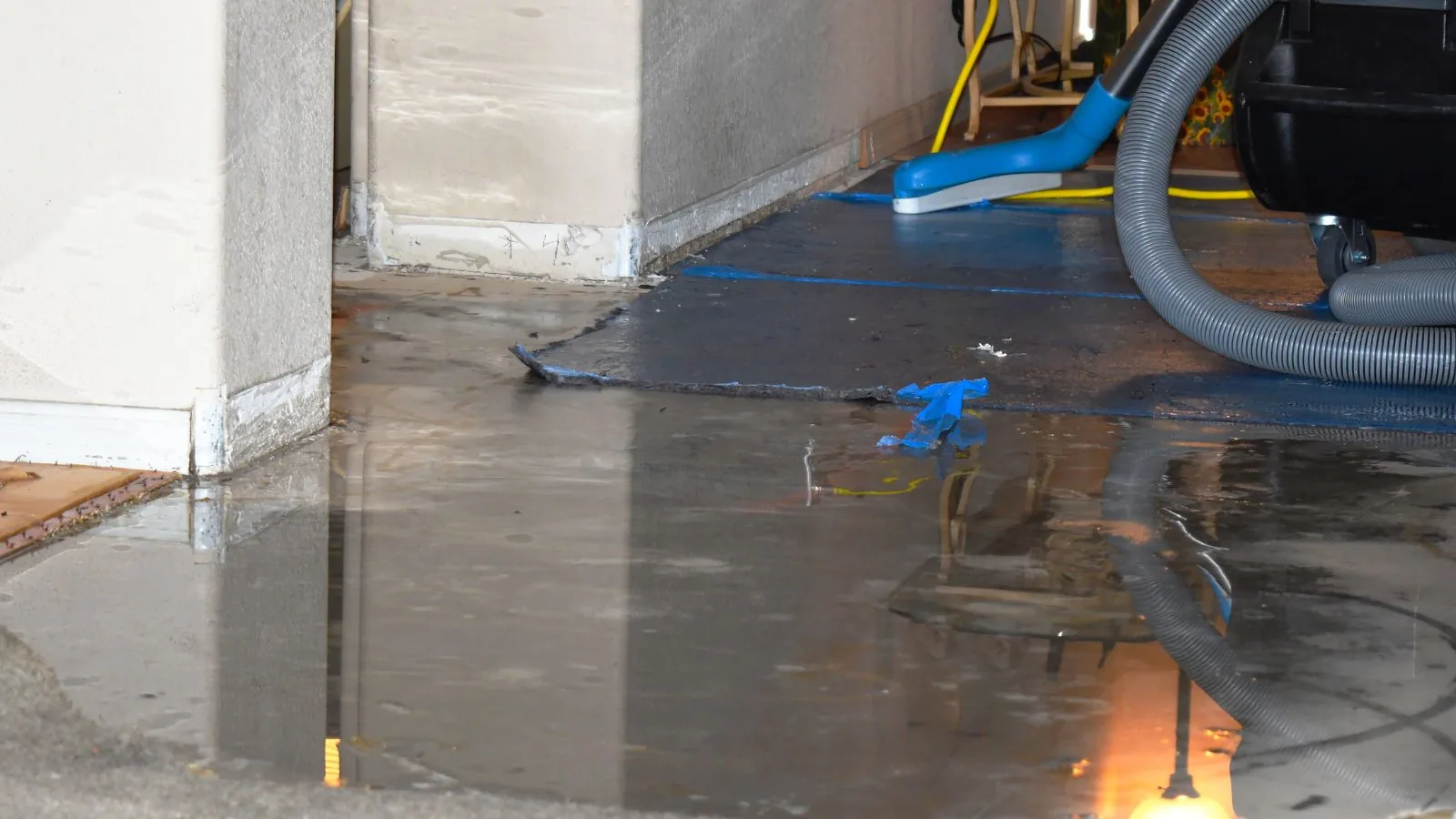
Standing water in a home in Shirley, NY is an emergency, and water removal works best when the pumps start before the water finds the subfloor. To get a crew started, call dispatch on (934) 223-1875. While you wait, stop the source if you can, close the main water valve, and carry valuables, papers and electronics up onto counters or a second floor.
Water extraction is the mechanical removal of standing and pooled water using submersible pumps, extraction units and wet vacuums, done before any drying equipment goes in. Keep people and pets out of water that may be contaminated. Cut power to a wet area only when the panel can be reached from dry footing. If you cannot, leave it and tell the dispatcher.
What the pumps and extraction units actually do
Water that sits on a floor is only part of the problem. A few minutes of standing water lets moisture wick into baseboards, the bottom edge of drywall and the padding under carpet. Extraction takes the bulk of it out so the drying stage has less to fight.
Deep water goes out with a submersible pump and a discharge hose. Shallow water and wet carpet are worked with a wand extractor that pulls water up through the fibers and padding. Hard floors and tight corners get a commercial wet vacuum.
A good water extraction company does not stop when the floor looks dry. The crew checks with moisture meters and a thermal imaging camera, because water often keeps moving into places a mop never reaches.
When standing water is an emergency
Treat it as an emergency when water is deeper than the baseboard, when it is still coming in, or when it touches outlets, appliances or the electrical panel. The same goes for any water that smells, looks gray or brown, or came from outside the house. Those cases need a crew now, not tomorrow morning.
We take these calls at night, on weekends and on holidays, and a same-day visit is the normal goal for standing water because wet drywall and padding get worse by the hour. Call first, then take photos of the water line and the damage before anything is moved. Photos help later if you file a claim.
If the water is still rising and you cannot stop it, say so on the call. The dispatcher will ask what you see, whether there is a basement, and where the water seems to be entering.
Which tool pulls out which kind of water
Different water needs different equipment. Here is how the crew usually matches the job to the tool, along with the trade-off of each.
| What you have | Usual tool | Trade-off |
|---|---|---|
| Several inches on a hard floor or in a basement | Submersible pump with hose | Fast on volume, but leaves a film that still needs a wet vacuum |
| Soaked wall-to-wall carpet | Wand extractor with weighted pass | Saves the carpet when caught early, padding often still comes out |
| Water pooled in a corner or low spot | Commercial wet vacuum | Precise, but slow across a large area |
| Water behind a toe kick or under cabinets | Small extraction head plus drilled access | Reaches trapped water, needs small holes that are patched later |
If the water has already been standing a while, the answer may shift from saving materials to removing them. A crew will tell you which is which on site.
What happens once the crew is inside
The order matters more than the speed of any single step. This is the usual sequence for a water removal visit.
Check for hazards
The crew looks at electrical risk, slip hazards and whether the water might be contaminated before anyone starts pumping.
Find and confirm the source
If the source is still running, it gets shut off or isolated. Extraction does little good while water keeps arriving.
Pump the deep water
Submersible pumps move the volume out through hoses to a safe discharge point away from the foundation.
Extract from soft materials
Wand extractors work carpet, padding and upholstered pieces to pull out what the pumps could not reach.
Map what is still wet
Moisture meters and a thermal imaging camera show wet walls, subfloor and framing, which sets up the drying plan.
Three kinds of calls and how the crew handles each
These are typical scenarios, described the way a dispatcher hears them.
Whole-house flood after a pipe or heavy rain
Water sits an inch or two across several rooms. The crew starts with pumps at the lowest point, then moves room by room with wand extractors, and checks every wall base with a moisture meter.
Pipe failed under the kitchen sink
Water is across the kitchen floor and under the cabinets. A wet vacuum and small extraction head pull water from the toe kick, and the crew checks the cabinet base and the floor beneath it.
Water standing in a crawl space for several days
Pumps drain the space, but days of standing water mean wet insulation and framing overhead. The crawl space water damage page explains how those spaces are dried and cleaned.
Why a wet winter day matters in this part of Long Island
On January 10, 2024, National Weather Service 24-hour rain totals included 2.33 inches at the Shirley Airport station. Rain like that on saturated ground, with a high tide holding back drainage, can push water into low rooms. After a storm like that, walk through the basement and any ground-floor room that sits below the yard grade before you go to bed.
The county hazard mitigation plan counts about 2,400 Town of Brookhaven structures damaged in Superstorm Sandy in 2012, mostly in mapped flood areas. Looking up your address on the FEMA map and the county GIS layers tells you how likely a flood is before you buy or change coverage.
Montauk Highway and William Floyd Parkway cross Shirley, and traffic can slow a crew on a stormy night. Give the dispatcher the nearest cross street and note any road that floods at your end of the block, so the crew can plan the approach.
Water and electricity
Never step into standing water if outlets, cords or appliances are submerged or the panel is wet. The risk is not worth a carpet. Call the dispatch line, stay on dry ground, and let the crew confirm the power is safe before pumps go in.
Where extraction ends and drying begins
Removing the visible water is step one. The walls, framing and subfloor still hold moisture that no pump can reach, which is why a job rarely ends with extraction. Drying uses air movers and LGR dehumidifiers, and it follows the ANSI/IICRC S500 standard for water damage restoration, so ask any company whether its crews work to it.
If the water went into carpet, the carpet and padding questions come next. If it sits in a lower level, the basement cleanup process covers sump pumps and floor drains. Once the bulk is out, structural drying and dehumidification brings the building materials back to a normal moisture level.
Crews serving the wider area also work near Patchogue, so tell the dispatcher which side of the hamlet you are on.
What shapes the cost of water removal
The price of water extraction depends on how much water there is and how much equipment and time the job needs. Insurance often covers sudden and accidental water damage, but gradual leaks and neglect often are not covered, and flood is usually excluded unless you carry separate flood coverage. Check your policy or ask your insurer. We help with the documentation an insurer may ask for, such as photos, moisture readings and a written scope.
Assessment comes first. The visit begins with an inspection, followed by a plain explanation of what the work includes and what drives its price. Price comes down to the items in this list once the crew sees the damage.
- Depth and volume of the water, and whether it is still coming in
- Type of water, clean, gray or contaminated, which changes the safety steps and what can be saved
- Floor type and layers, since carpet, padding and subfloor all hold water differently
- Access to the space, including stairs, basements and tight crawl areas
- After-hours timing and how many rooms the water reached
The number depends on what the crew finds, so call (934) 223-1875 and describe what you see.
Want your real number? Call the 24/7 line.
☎ (934) 223-1875Frequently Asked Questions
Yes. The dispatch line is open 24/7, including nights, weekends and holidays, and we send a crew based on what you describe. We do not promise a fixed arrival time because storms and road conditions change it. Tell the dispatcher the street, how deep the water is, and whether it is still coming in.
Water removal is the first stage, pulling standing water out with pumps and extraction units. Restoration includes that, plus drying, monitoring, cleaning and repairs. Many homes need extraction first and drying right after.
Damage starts right away and builds as the water soaks into drywall, padding and wood. Mold needs moisture, and the longer materials stay wet, the harder the job gets. We do not give a safe number of hours. Call as soon as you see it.
A wet and dry shop vacuum can help with a small, clean spill if the area is dry of any electrical risk. Do not use a household vacuum, and do not wade into deep water. If the water is deep, gray or near power, wait for the crew.
Not always. Clean supply-line water is the lowest risk, but water that crossed a floor can pick up dirt and bacteria. Water from outside, a drain or a toilet should be treated as contaminated. Keep children, pets and bare skin out of it.
It depends on the cause and your policy. When the water came from outside, flood coverage is the question: it is usually excluded from a standard policy and sold separately. Read the policy, and keep photos and records for your insurer.
Air movers push air across wet surfaces so moisture leaves them, and LGR dehumidifiers pull that moisture out of the air so it does not settle back. Drying time depends on the materials and how wet they were, and is usually measured in days. The crew sets up and monitors the equipment as part of the job and checks readings until they return to normal.
None. Phone the line at any hour. The dispatcher asks what is going on and schedules a crew, same day when available. The dispatcher cannot say exactly when the crew reaches you, because roads and demand change hour to hour.