
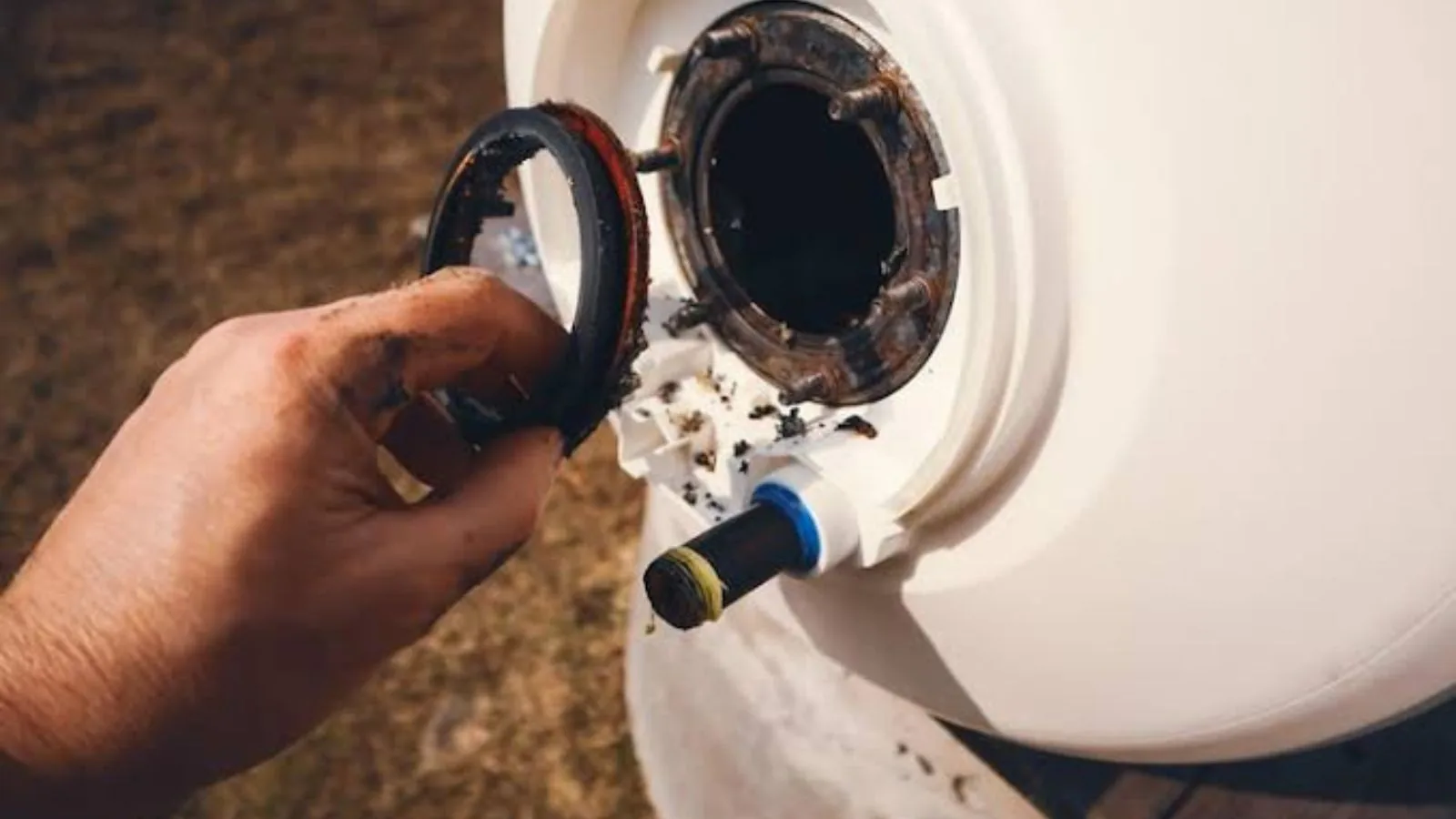
Water heater damage in Shirley, NY can start as a drip at the base and turn into a flood when the tank gives out. Close the cold water supply valve on top of the heater, then shut off power at the breaker for an electric unit or set a gas unit to off. The number to start with is (934) 223-1875, and dispatch handles the rest.
Water heater leak cleanup is the removal of water released by a failed tank, relief valve or connection, followed by drying of the floor, walls and anything stored nearby. Keep people and pets away from the pooled water, since it may still be hot. If you smell gas, leave the house and call the gas utility first, then call us.
Tank failure or loose connection: telling them apart
The source decides how much water you are dealing with and what happens next. The signs below help sort it out before the crew arrives.
| Sign | Likely source | What it means |
|---|---|---|
| Water pooling around the base, tank rusty or bulging | Tank has failed | Usually a full tank of water on the floor. The unit is typically replaced |
| Drip at the top pipes or fittings | Supply or hot line connection | Often a repair, and the leak may be small and slow |
| Water from a pipe by the side of the tank | Temperature and pressure relief valve | The valve may be doing its job, so have a plumber check pressure |
| Wet floor near the heater with no obvious drip | Condensation, drain line or nearby fixture | Check before assuming the tank is the cause |
Even if the leak looks small, shut off the supply and call. A slow drip under a tank can soak a subfloor for weeks.
When a leaking water heater is an emergency
It is an emergency when water is spreading across the floor, when the tank is hot and hissing, or when the heater sits near an electrical panel, furnace or finished room. A tank that is running while leaking can keep feeding water until the supply is closed.
We take these calls through the night, on weekends and on holidays, and a same-day visit is the normal goal. A heater in a closet or basement corner drains into the places that are hardest to dry, and a long delay can add days of drying. Say on the call whether the unit is gas or electric and whether water is near the panel.
Safety checklist for a leaking water heater
Start with the heater, not the water. Turn off the power to an electric unit at the breaker, or set a gas unit to its off or pilot position, and close the cold water supply valve on the pipe above the tank. Do not touch the heater or its wiring while standing in water.
Water from a tank can be hot enough to scald, so wait before wiping or sweeping it up. Keep children and pets away from the area, and do not try to drain a large leak by hand. If you smell gas, leave the house and call the gas utility or 911 before you call the dispatch line.
Why older homes need a second look
Walter T. Shirley began selling four-room homes on small lots near Mastic Bay in the 1940s, roughly 4,000 of them. Many Shirley homes are older and compact, so a water heater often sits in a tight utility space with little room to spread out or dry. After a leak, ask the crew to check nearby valves, supply lines and any wiring that got wet.
A compact space also means water reaches the wall behind the heater quickly. Check the lowest few inches of drywall and any boxes or stored items touching the floor.
What happens after the heater is shut down
The sequence below keeps hot water, electricity and moisture under control.
Secure the unit
The crew confirms that water, power and gas supplies are off. A licensed plumber handles the heater itself.
Remove the water
Pumps, extraction units and a wet vacuum clear the floor, along with carpet and any stored items soaked through.
Trace the spread
Moisture meters and a thermal imaging camera show how far water wicked into walls and the floor beneath.
Dry the area
Air movers and LGR dehumidifiers run in the utility space and any room the water reached, following ANSI/IICRC S500.
Document for the claim
Photos, readings and a written scope go to you, including the water heater label showing its age.
Gas, electric and hot water
Never touch an electric water heater that is standing in water. Do not relight a gas unit that got wet. Hot water can scald, so stay clear of the tank and puddle until the crew arrives.
Where the water ends up and what comes next
Water heaters often sit in basements, utility rooms or closets, so most of the cleanup happens low. If the water ran into carpet, the carpet water damage restoration page explains what can be saved. If the heater is in a basement, the basement cleanup page covers floor drains and sump pumps. For the first pass of pulling water out, see water extraction.
Hot water is not sterile, and it can steam into walls. Dry the wall base and check for odor in the days that follow. Mold depends on moisture, the S520 standard guides how it is tested and removed, and a physician handles health questions.
Public water, well water and refilling the system
After a tank failure, the plumber will drain, repair or replace the heater and then restore the supply. The Suffolk County Water Authority is the public water supplier for much of Suffolk County, and many homes are on a private well instead. Know which one you have before anyone flushes the system, and ask your water supplier if you are unsure.
If you are on a private well, the Suffolk County Department of Health Services handles well questions. Let the plumber know which source you use. Crews also serve Mastic Beach and nearby towns.
What shapes the cost after a water heater leak
The cost depends on how much water the tank released and which rooms and materials it reached. A heater that failed suddenly is often a covered event, and one that dripped for weeks may be treated as neglect. Check your policy, ask your insurer, and use the photos, readings and written scope the crew provides.
Assessment comes first. Before any work starts, the crew inspects, reads the moisture levels and explains the scope and pricing. How the job is priced is set by these factors, not by a flat rate.
- How much water the tank or connection released and for how long
- Floor and wall materials in the utility area and nearby rooms
- Whether the water reached finished space, carpet or stored belongings
- Drying equipment and days needed in a tight space
- Whether the leak was sudden or slow
Call (934) 223-1875 and describe where the heater sits.
Want your real number? Call the 24/7 line.
☎ (934) 223-1875Frequently Asked Questions
Yes. Whatever the hour or the day of the week, a dispatcher picks up. We do not promise an arrival time. Tell the dispatcher whether the heater is gas or electric and whether water is near any panel.
None. The dispatcher takes your details by phone and sends the next available crew, with same-day response when it can be had. Arrival depends on where crews are and what the roads look like, so no time is promised.
No. A licensed plumber replaces or repairs the heater. The crew removes the water, dries the area and documents the damage.
It usually starts as clean supply water, but it can pick up dirt from the floor and the tank sediment. Sit tight until the crew checks. If it reached a drain or a sewage line, treat it with more caution.
Sudden and accidental damage is often covered, while long-term leaks often are not. The tank itself may not be covered by the same policy section as the water damage. Check your policy and ask your insurer.
For an electric heater, yes, if the panel is dry and you can reach it standing on dry ground. If not, stay out and call.