
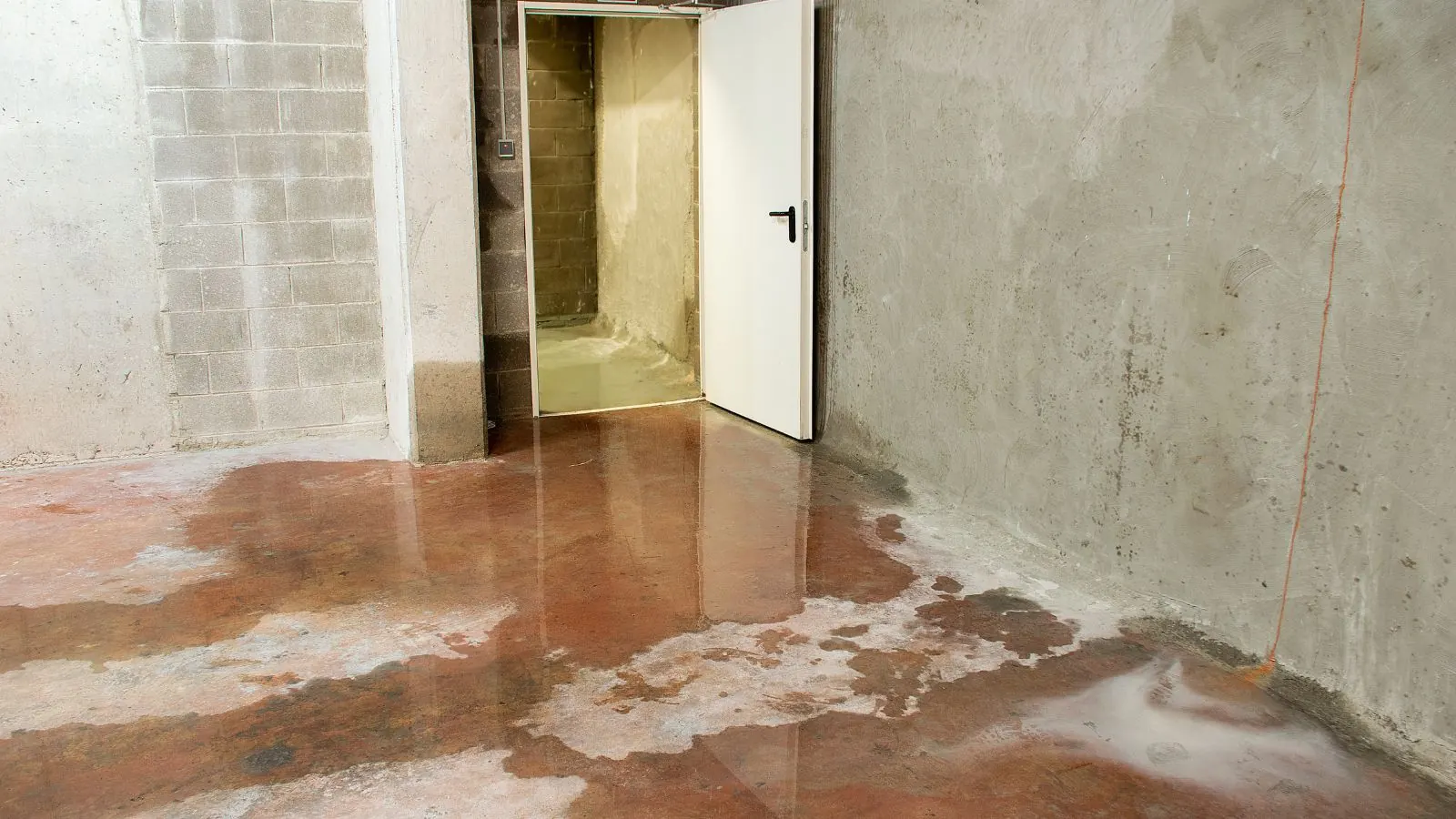
A slab leak in Shirley, NY is a break in a pressurized water line under or inside a concrete floor, and it keeps running until someone stops it. Treat a suspected one as urgent, because the water does not pause overnight. The 24/7 dispatch line is open for exactly this call.
While you wait, shut off the main water valve, lift rugs and valuables off wet flooring, and keep people and pets out of any standing water. Switch off power to a wet area only if you reach the panel from a dry spot. Slab leak water damage repair begins once the water is stopped, and a licensed plumber handles the pipe itself.
A warm spot on the floor, a meter that will not stop, or damp flooring?
Those are the classic signs of a slab leak. A warm patch on tile can mean a hot water line is leaking beneath it, and a water meter that keeps moving with every fixture off points to a leak somewhere on the property. This page covers what slab leak water damage repair means once that water has reached floors and walls.
Other clues are the sound of running water when nothing is on, a water bill that jumps without a reason, baseboards that darken, carpet that feels damp underfoot, tile that lifts or cracks, and a musty smell near the floor. One sign alone can have another cause. Two or three together deserve a call.
- A floor that feels warm in one place
- A meter that moves with all fixtures off
- Hissing or running water inside a wall or floor
- Damp carpet, lifting laminate or tile that sounds hollow
- A musty smell that comes back after cleaning
When a slab leak is an emergency
It is an emergency whenever water is still coming up, spreading into a second room, or pooling against walls and furniture. A leak that you cannot stop at the main valve, or one that appears with hot water failing at the same time, should not wait for morning. Same-day response is offered when available, and the line does not close at night.
If the water is only a damp patch and the main valve is shut, the situation is calmer but still time sensitive. Concrete, subfloor and baseboards keep holding moisture after the source is stopped. A call the same day keeps a small area from becoming a large one.
Safety steps while you wait for the crew
A slab leak hides the water, so the safety steps are about the building rather than the puddle. Shut off the main water valve if you can find it, and keep everyone off any floor that feels warm or soft. Do not run the dishwasher or washing machine while the pipe is suspect, because every fixture you run feeds the leak.
Keep anything electrical off the wet floor, and do not use a wet vacuum near a floor outlet. If a wall or floor outlet is wet, leave its circuit alone and call the electric utility or an electrician before the restoration crew arrives. Take dated photos of any wet spots, because they show an insurer how far the water traveled.
Water and electricity do not mix
Do not walk through standing water to reach a panel, and do not plug in or unplug anything that is wet. If outlets, power strips or the panel are near the water, stay back and call an electrician or your utility first. Leave wet-area breakers off until the area has been checked.
Does a Shirley home sit on a slab?
There is no published count of how many Shirley homes sit on slabs, so this page does not guess. Foundation type varies from basements to crawl spaces to slab-on-grade, and an addition can differ from the original house. Ask the crew when you call, and check your plans or whether the house has a basement or crawl space hatch.
Most of the early housing here dates to the 1940s, a run of about 4,000 small four-room homes that Walter T. Shirley sold near Mastic Bay. Many homes here are older and compact, so older supply lines, valves and wiring deserve a look after a leak. Ask the crew to check them while the floor is open.
What the water does after it leaves the pipe
Water in a supply line is under pressure, so it finds the easiest way up. It travels through cracks and joints in the slab and spreads sideways under flooring, then climbs into drywall and baseboards by wicking. Concrete itself holds moisture and releases it slowly.
That slow release is why a floor can feel fine for a day and then start to lift or smell. Engineered wood, laminate and carpet pad take the hit first. The subfloor, trim and the bottom of the walls follow. Wood floors are covered under hardwood floor repair.
What happens on site once the water is stopped
The plumber and the restoration crew do different jobs, and both are needed. The order below is the usual one.
Leak found and stopped
A licensed plumber locates and isolates the leaking line. The crew works around that visit and waits for the supply to be shut off.
Extract standing water
Extraction units pull water off the floor before it soaks further. The water extraction page describes this stage.
Map what is wet
Moisture meters and a thermal imaging camera find wet flooring, baseboards and wall bottoms. The slab surface is checked too.
Remove and dry
Wet carpet pad, trim and soaked drywall are removed. Air movers and LGR dehumidifiers dry what is left, and concrete is dried slowly with readings repeated.
Document
Photos, moisture logs and a written scope are kept for an insurer. The crew follows the published ANSI/IICRC S500 standard, and you can ask any company whether it does the same.
Fixing the pipe: the options and their trade-offs
A licensed plumber decides how the line is repaired, and the restoration crew does not choose for you. The options below are listed so you can ask the right questions.
| Approach | What it involves | Trade-off |
|---|---|---|
| Repair at the leak | Opening the floor over the break and fixing the pipe | Fastest to do, but the old line may fail elsewhere |
| Reroute the line | Running new pipe through walls or the attic | Less floor damage, more wall and ceiling work |
| Repipe the home | Replacing the supply lines throughout | Biggest job, and it often makes sense in an older home |
Know your water supply before anyone flushes a system
The Suffolk County Water Authority is the public water supplier for much of Suffolk County, and it publishes an annual drinking water quality report. Many homes are on a private well instead. Know which you have, because a well home has no utility meter to watch and the pump may run more than usual during a leak.
Private well questions go to the Suffolk County Department of Health Services. Ask them before anyone flushes or disinfects a system after flooding. Call (934) 223-1875 once the water is stopped and tell the dispatcher which supply you use. The dispatch line also covers neighbors such as Mastic Beach.
What shapes the cost
The first visit is an assessment, not a repair. Once the crew has measured the wet materials, you get the scope and price in plain terms, shaped by the factors below. Pipe repair is a separate plumbing cost.
Slab leaks raise a special question, because policies differ on whether they pay to reach the pipe. Ask your insurer in writing, remember that flood is usually excluded, and take photos before cleanup.
- How large an area is wet and how many rooms it reached
- Flooring type, since carpet, laminate and tile dry or fail differently
- How long the leak ran before it was found
- How many days of drying equipment the slab and subfloor need
- Whether baseboards, drywall and cabinets must come out
Want your real number? Call the 24/7 line.
☎ (934) 223-1875Frequently Asked Questions
A warm patch on tile or concrete can mean a hot water line is leaking under it. Check the water meter with every fixture off. If it keeps moving, shut off the main valve and call a plumber and the dispatch line.
A leak under a slab stays hidden until water rises into flooring. A bill that jumps with no change in use, plus damp carpet or lifting tile, is a good reason to shut the main valve and have the floor checked.
Yes. Calls are taken every hour of every day, with no closing time. Call (934) 223-1875 and say whether water is still flowing. A crew is sent the same day when available, and no arrival time is promised.
Check whether the house has a basement or a crawl space hatch. If neither, the floor may sit on a slab, though additions can differ from the original. The crew can confirm this on the call or on site.
None. The dispatcher takes the details of the loss on the 24/7 line and books a crew, same day if available. Shut off the main valve first if you can.
Mold needs moisture, and a floor that stays damp can support it. Testing and remediation follow the published ANSI/IICRC S520 standard, and health questions belong with a physician.
It depends on the policy and on whether the damage was sudden and accidental. Some policies treat the cost of reaching the pipe differently from the water damage itself. Check your policy, ask your insurer, and document the damage before cleanup. The burst pipe water damage page covers a similar situation above the floor.