
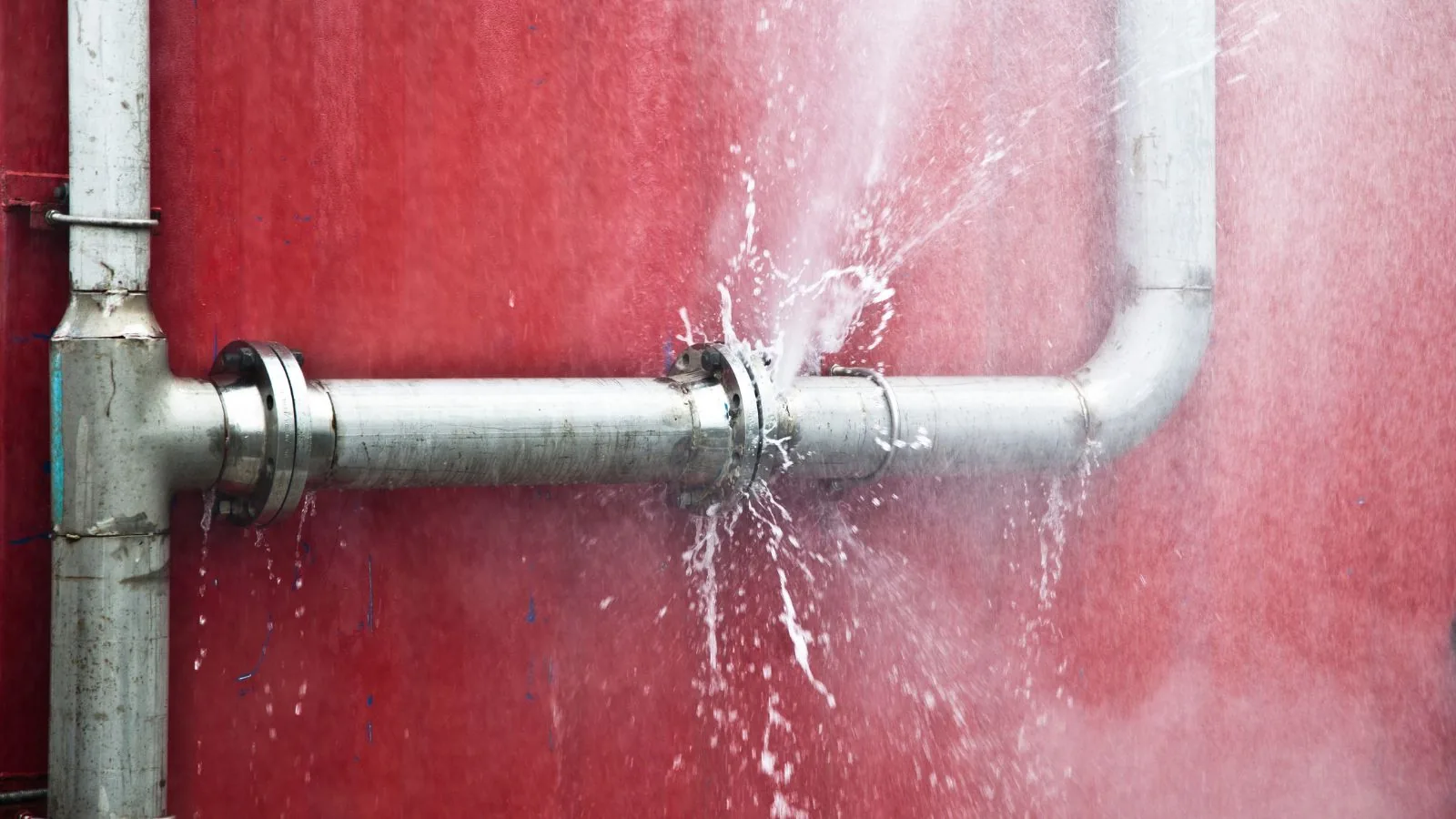
Burst pipe water damage in Shirley, NY gets worse every minute the line stays pressurized, so the first job is to shut it off. Find the main water valve, turn it fully closed, then open a faucet at the lowest point in the house to drain what is left in the lines. Phone (934) 223-1875 to reach dispatch and get a crew moving.
Burst pipe water damage is the flooding, soaked framing and saturated finishes left behind when a supply line under pressure splits, pops a fitting or separates at a joint. Move valuables out of the wet area and keep people and pets away from standing water. Shut off power to the wet rooms only if you can reach the panel on dry ground. If the panel is wet, stay out and tell the dispatcher.
Why a split supply line does so much harm so quickly
Drain lines carry waste by gravity and leak slowly. A supply line is different, because it is under constant pressure and keeps pushing water out until someone closes a valve. A small split inside a wall can empty a lot of water into the cavity before the first stain shows on the outside.
That is why a burst line often does more harm than the same volume of water spilled on the floor. The water runs down inside the wall, soaks insulation and drywall from behind, and travels along joists to the ceiling below. By the time you notice, the surface can look fine while the inside is wet.
Where the water usually shows up
The first clue changes with where the pipe failed. These are the common signs a crew sees.
Sound in the walls
A hiss, drip or running noise when every fixture is off often points to a split line inside a wall.
Ceiling stain or bulge below a bathroom
A brown ring or sagging patch means water has already collected above and is working through the drywall.
Water meter spinning
With everything off, a moving meter or a rising reading on your own water meter points to a leak somewhere on the property.
Warped baseboards and cupped flooring
Edges lifting along an exterior wall or near a kitchen can mean water is traveling under the finish.
Low water pressure and sputtering taps
A sudden drop with no one else in the house using water can follow a failure upstream.
When a burst pipe is an emergency
It is an emergency whenever water is running and you cannot stop it, when water has reached outlets or the electrical panel, or when a ceiling is sagging with water behind it. A sagging ceiling can drop without warning, so keep people out from under it.
We take burst pipe calls through the night, on weekends and on holidays, and a same-day visit is the normal goal. Water left in framing keeps spreading, and the longer drywall and insulation stay wet, the more of them tend to come out. If you cannot close the main valve, say so on the call and the dispatcher will tell you what to try next.
A line gives way under the kitchen sink
One of the most common calls is a supply line under the kitchen sink that splits while the family is out. Water runs across the floor, into the toe kick and down into the cabinet base. The first job is the shutoff valve under the sink, or the main valve if that one fails.
The crew pulls the water, checks the cabinet floor and the subfloor below with a moisture meter, and decides what can stay. Cabinet bases and flooring are expensive to replace, so catching it early matters. The kitchen water damage restoration page covers cabinets, counters and appliances in more detail.
Older houses and the pipe behind the wall
Much of Shirley was laid out from the 1940s as small lots of compact four-room homes near Mastic Bay. Many homes here are older and compact, which means plumbing, valves and wiring may be decades old. After any burst, ask the crew to check the nearby supply lines, shutoff valves and any wiring that got wet. Do not assume the repair ends at the one split.
NOAA normals for the Islip airport station show about 98 days a year with lows at or below freezing. That is the nearest NOAA station and not a Shirley gauge, but it is a good reason to know where your lines run along exterior walls and unheated spaces. If cold caused the failure, the frozen pipe page covers that case in more detail.
From the first call to a dry house
This is how the work usually runs after a pipe lets go.
Stop the water
The crew confirms the main valve is closed and isolates the failed section so no more water enters the structure.
Pull the standing water
Pumps and extraction units remove what is on the floor, then wand tools work carpet and pad.
Find the wet material
Moisture meters and a thermal imaging camera trace the water through walls, ceilings and subfloors, including places you cannot see.
Open and dry
Wet drywall and insulation that cannot dry in place are cut out. Air movers and LGR dehumidifiers dry the rest, following ANSI/IICRC S500.
Document and hand off
Photos, readings and a written scope go to you. A licensed plumber repairs or replaces the pipe, since restoration and plumbing are separate trades.
Cut it out or dry it in place
After a burst, the question that drives the bill is which materials stay and which go. The answer depends on the water, the material and the time that has passed.
| Material | Often dried in place | Often removed |
|---|---|---|
| Drywall | Caught early, wet on one face, clean water | Soaked through, soft, crumbling or stained from inside |
| Insulation | Rarely, since it holds water | Almost always, if saturated |
| Hardwood or laminate | Slight cupping, early action | Heavy cupping, swelling at seams |
| Carpet pad | Occasionally if clean and quick | Often, because it holds water against the subfloor |
The crew should explain each call on site and show you the readings behind it.
Electrical and ceiling safety
Do not touch switches, outlets or fixtures in a room where water is coming through the ceiling or walls. A bulging ceiling can hold gallons of water and let go all at once. Stay out of the room and call the dispatch line.
Drying is what keeps the damage from coming back
Removing the pipe failure is only half the work. Wet framing and subfloor stay wet long after the surface feels dry, and that hidden moisture is what leads to odor and mold. Structural drying and dehumidification carries the job until readings return to a normal range.
Mold needs moisture, and testing and remediation follow the S520 standard. If you see or smell mold, ask any company for its New York license. Health questions belong to your physician.
Crews also cover nearby Mastic Beach and surrounding towns, so give the dispatcher your exact address.
What affects the cost after a burst pipe
The cost of burst pipe water damage repair depends on how long the water ran and how far it traveled. A pipe that bursts suddenly is the classic covered event, though policies differ, and a slow drip behind a wall may be treated differently. Call your insurer early, and use the photos, moisture readings and written scope from the crew in the claim.
Assessment comes first. On site, the crew checks the damage with a moisture meter and then walks you through scope and price before work begins. What you finally pay turns on the factors in this table.
- How long the line ran before the water was shut off
- Number of rooms and floors the water reached, especially if it came through a ceiling
- Materials affected, such as drywall, insulation, flooring and cabinets
- Amount of equipment and days needed to bring readings back to normal
- Access to wall cavities and whether any finish must be opened
Call (934) 223-1875 and describe what you see for a real number.
Want your real number? Call the 24/7 line.
☎ (934) 223-1875Frequently Asked Questions
Yes. The dispatch line runs 24/7, including nights, weekends and holidays. We do not give a fixed arrival time, because road and weather conditions change it. Tell the dispatcher what you see, close the main valve if you can, and keep people out from under any sagging ceiling.
It is usually where the water line enters the house, often in a basement, utility area or near the water heater. Many homes also have a curb valve or a meter shutoff outside. Learn where yours is before you need it, and ask the crew to show you if you are not sure.
Water damage comes first because it keeps spreading. The crew can stop the spread and dry the structure while a licensed plumber repairs the line. If you have a plumber you trust, call them as well.
Only for the wet areas, and only if you can reach the panel while standing on dry ground. If water is near the panel or you are unsure, do not go to it. Tell the dispatcher.
Not always. A pipe can burst from age, corrosion, pressure or a failed fitting, or from freezing. Cold-weather failures are covered on the frozen pipe water damage page.
Sudden and accidental damage is often covered, but coverage depends on the cause and your policy. Check your policy, ask your insurer, and keep photos and receipts.
None. When you phone the 24/7 line, the dispatcher asks about the water and arranges a crew, same day if the schedule allows. An arrival time cannot be promised honestly, since roads, weather and how many calls are open all move it.