
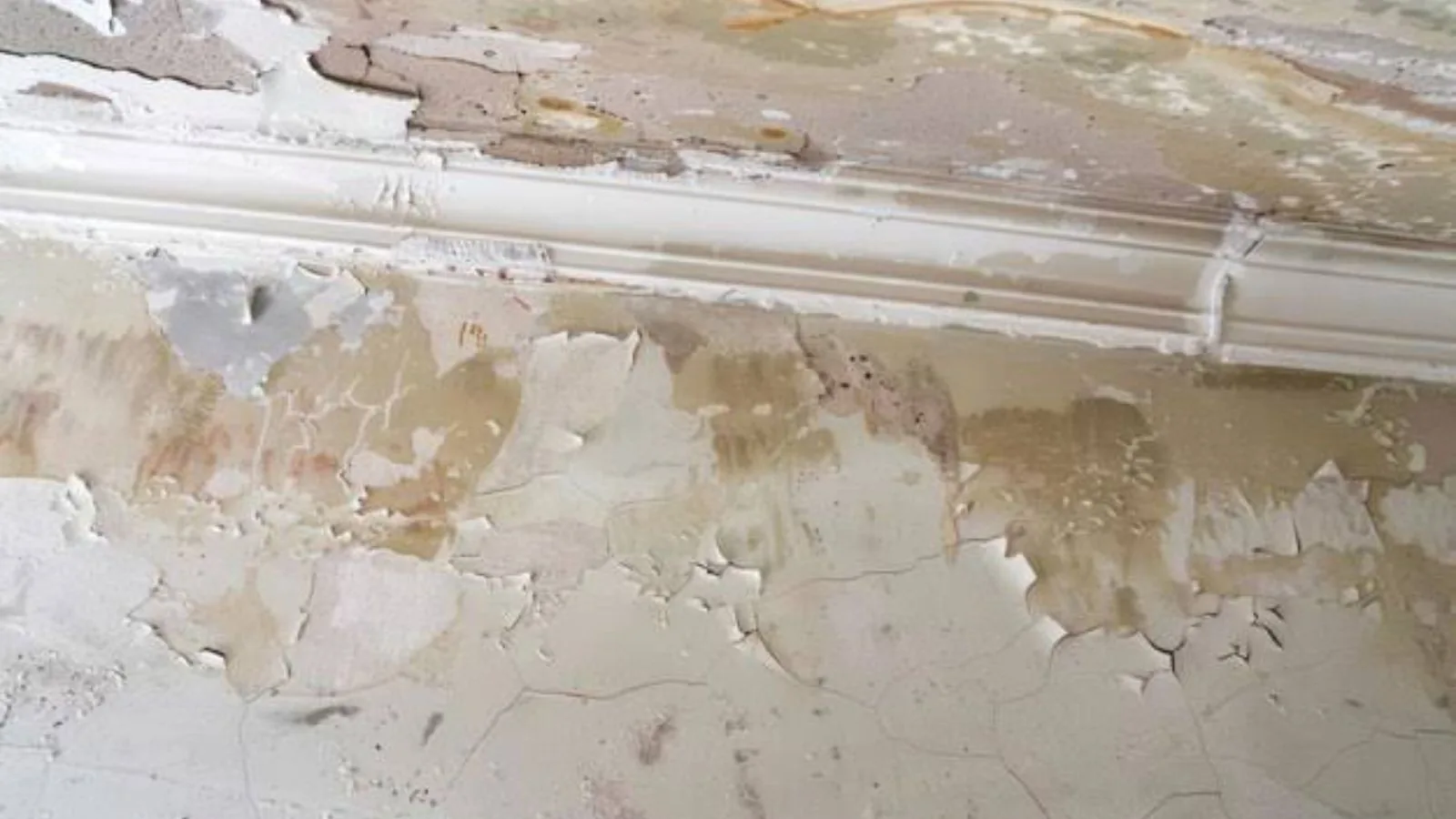
Wall and drywall water damage repair in Shirley, NY is the work of finding how far water travelled inside a wall, removing the sheetrock that cannot dry, and drying the framing and insulation behind it. A wall is hollow, so water that enters at one spot often shows up a foot or two away. The stain you see is usually the edge of a bigger wet area.
Call (934) 223-1875 and the dispatch line will send restoration professionals who map the wall with meters before cutting. If the wet wall sits under a ceiling stain, ceiling water damage repair often belongs in the same visit.
Three walls the crew sees often
Walls get wet in patterns, and each pattern points to a different source. These three come up often enough to be worth describing.
A kitchen wall that took water through the siding
Wind-driven rain or a failed seal around a window can put water behind the siding and down into a kitchen wall. The first sign is often a brown streak above the counter or paint that bubbles near the window. The leak outside must be fixed, because drying the inside of a wall that is still taking water does nothing.
A hole in a kitchen wall
A pipe repair, a removed appliance or a spot where a hose burst can leave an opening in the drywall. Water often runs down inside the cavity, so the hole is not the full damage. The crew reads the wall above and below the opening and the baseboard beside it.
The corner where the wall meets the ceiling by a shower
A bathroom corner stays warm and damp, and a failed caulk line or a leak from the tub above lets water in at the joint. Paint peels, the tape lifts and a dark line can form along the top edge. If you see that, check for a drip source before you repaint, and read about mold remediation if spots have already formed.
Signs a wall is holding water
Look at the base of the wall and the paint first. Press gently with a thumb in a few places.
- Paint that bubbles, peels or looks wavy
- Baseboards that swell, lift or pull away from the wall
- A yellow or brown stain that returns after painting
- Drywall that feels soft, crumbly or cold to the hand
- A musty smell near an outlet, a switch plate or the floor line
- Wallpaper seams that open or tape joints that show through
Water damage on baseboards is a useful early sign, because wood trim wicks water up from a wet floor and shows it quickly.
From moisture map to patched wall
A good repair is slow to start and fast to finish. The mapping decides how much comes out.
Map the moisture
A moisture meter reads the wall at set heights, and a thermal imaging camera shows cold, wet zones behind paint. The crew marks the boundary of the wet area.
Cut out what cannot dry
Wet sheetrock is cut in a straight line above the highest moisture reading, often called a flood cut. Wet insulation comes out with it.
Open the cavity
With the wall open, the framing is visible and the crew checks for rot, rust or hidden leaks.
Dry the framing
Air movers and a dehumidifier run until the studs read dry. See structural drying and dehumidification for that stage.
Hand over a written scope
The scope lists what to replace, such as drywall, insulation and trim, so a contractor can patch, texture and paint.
Drywall, plaster and trim: what survives
Different wall materials take water in different ways. The table shows the usual call.
| Material | How it reacts | Usual call |
|---|---|---|
| Standard drywall | Absorbs, softens and sags | Cut out if wet more than briefly |
| Moisture-resistant board | Resists briefly but still wets | Often cut out in a long leak |
| Plaster on lath | Slower to absorb, hard to dry | May dry in place, or section is removed |
| Fiberglass insulation | Holds water and mats down | Removed when wet |
| Wood baseboard | Swells, can be dried | Dried or replaced, depending on swelling |
| Painted paneling | Warps and stains | Often replaced |
Plaster is rare in newer houses, but many older homes still have it. Ask the crew to identify which material your wall is made of before any cutting.
Older walls and what to ask the crew to check
The Shirley area was developed from the 1940s, and many homes here are older and compact. Old wiring, valves and supply lines sit inside the walls that are now wet. Ask the crew to check them while the wall is open, because it is cheaper to look now than to cut again later.
Compact rooms also mean one wet wall can affect a closet, a bathroom and a hallway at once. Homes in Patchogue and nearby get the same dispatch, and the Patchogue page shows how that works.
Outlets and switches in a wet wall
Water inside a wall can reach outlets, switches and cables. Do not touch a wet outlet, and do not plug anything into one. Turn off power to the wet area only if you can reach the panel while dry, then call.
What shapes the cost of wall repair
Cost follows how much wall is wet and whether the cavity holds insulation, wiring or trim. Where the water came from drives coverage for wall repairs. A sudden source is often covered, a long-running leak often is not, and flood is generally excluded. The crew can supply photos and a written scope for the claim.
The crew begins by looking at what the water did. A walk-through with readings comes before any figure is discussed, and these factors are what move it.
- How many feet of wall are wet and how high the moisture reaches
- Whether insulation, trim or wiring must be replaced
- How long the wall stayed wet before drying began
- The days of drying equipment needed
- The patch, texture and paint a contractor does afterward
Want your real number? Call the 24/7 line.
☎ (934) 223-1875Frequently Asked Questions
Sometimes, if the water was clean and the wall was wet a short time. Once drywall sags, crumbles or stays wet for days, it is usually cut out. Moisture readings decide.
The crew cuts above the highest moisture reading, often a foot or two above the visible stain. The cut is straight so a new sheet can be fitted.
It can be. Baseboards swell when water wicks up from the floor or leaks from the wall, so look behind them. The crew checks the drywall and the subfloor next to the trim.
No. Paint hides the stain but not the moisture, and a wet wall can grow mold or stain through. Fix the source, dry the wall and then paint.
They mean the same thing in everyday use. The crew handles sheetrock water damage repair the same way as any drywall job, with mapping, flood cuts and drying.
None. Call (934) 223-1875 any time. Tell the dispatcher what is wet, and a visit is arranged for the same day if the schedule allows. No arrival time is promised.