
A dishwasher hose drips for an hour and the kitchen floor is wet. Do you grab towels, or do you call someone? In Shirley, NY, where many homes are older and compact, the right answer depends on four things: what kind of water it was, how much of it, how long it has been there, and where it went.
This guide gives you a decision-level answer, not a drying manual. Some situations are safe for an owner, and a few are not safe at all. Knowing the difference saves money in one direction and prevents bigger damage in the other.
Start with the water: three categories
Industry practice sorts water into three categories. Category 1 comes from a clean source, such as a supply line, a faucet or rainwater that has not touched anything dirty. Category 2 is gray water, such as from a washing machine or dishwasher, which may carry contaminants. Category 3 is grossly contaminated, such as sewage or floodwater.
The category can change with time. Clean water that sits on materials for days can pick up bacteria and be treated as a higher category. This is part of why speed matters even for a clean leak.
The clean-water-only rule
Do-it-yourself drying belongs to Category 1 water only. If the water came from a sewage backup, a toilet overflow with waste, a flooded yard or river, or anything you cannot identify, stop. Keep people and pets out, and call. Cleanup of that water involves protective gear and disposal that a household should not improvise.
A decision table: do it yourself or call
Read across the row that matches your situation. When two rows fit, follow the more cautious one.
| Situation | Likely owner-safe? | What to do |
|---|---|---|
| Small clean spill, on a surface, found right away | Yes | Wipe and ventilate, then check again the next day |
| Clean supply leak that reached carpet or a larger area | Usually no | Call, since water travels under materials |
| Water behind a wall, under flooring or above a ceiling | No | Call, since it cannot be reached or measured by eye |
| Wet more than a day or two | No | Call, since mold can start in that window |
| Gray water from a washer or dishwasher | Unsure | Treat with caution, and call if more than a small area |
| Sewage, septic or flood water | No | Do not touch, call right away |
| Electrical outlets or appliances involved | No | Shut off power if safe, and call |
Size and time: the two clocks
Size matters because drying works on volume. A damp patch you can cover with a towel is a different job from a room, and a different job again from a floor and wall. As a rough guide, if you cannot reach and see all the wet material, you should not rely on guessing.
Time matters just as much. Materials that stay wet for more than a day or two invite microbial growth, and mold needs moisture to grow. If you are past that window, the question is no longer whether it looks dry but whether it is dry.
A quick test helps. If you can name every wet surface, reach it with a towel, and expect it to be dry by tomorrow, you are likely in owner territory. If any part of that sentence makes you hesitate, the hesitation is your answer.
Why walls, subfloors and cavities change the answer
Water does not stay where it lands. It wicks up drywall, runs under flooring and settles in insulation, and a surface that feels dry can sit on a wet layer. Fans and open windows can dry the exposed surface and leave the cavity wet.
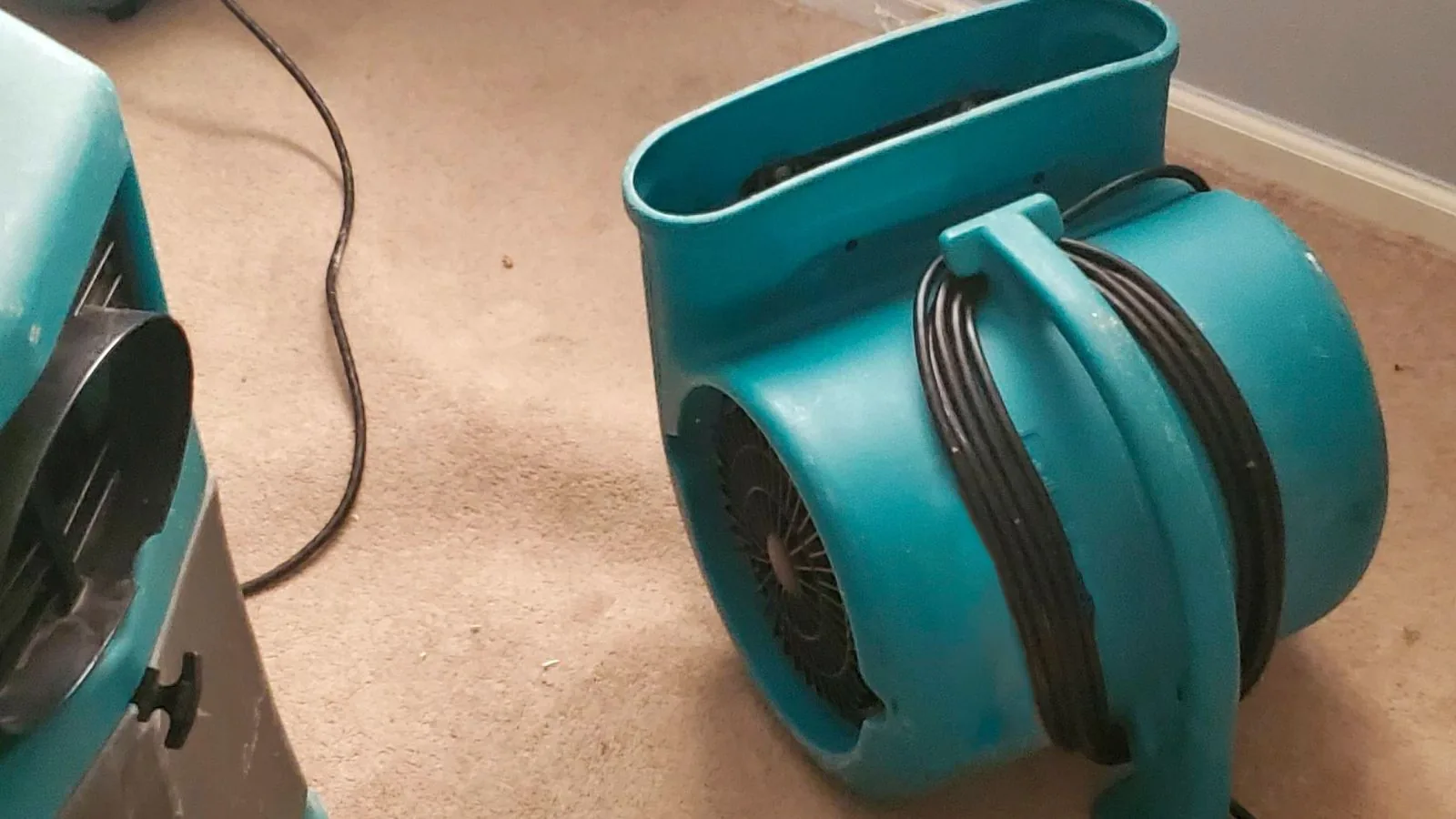
That is the work of professional equipment. A crew uses moisture meters to read inside materials and thermal imaging to find cooler, wetter areas, then sets air movers and dehumidifiers to dry to a target. The method is described on the structural drying and dehumidification page.
If you have standing water, the first job is removal, and the water extraction page explains why that step is done with extraction equipment, not a household mop and wet vac alone.
Septic and cesspool homes in Shirley, NY
New York State said in January 2022 that thousands of homes in the Carlls River and Forge River watersheds were unsewered and relied on septic tanks and cesspools, and that outdated systems are prone to failure. The Forge River sewer district was built to connect about 1,900 parcels in the Shirley-Mastic area and retire about 1,889 cesspools and septic systems.
If your home is on a septic system or cesspool, heavy flooding can push wastewater back into the house. A sewage backup is Category 3 water, which means it is outside the do-it-yourself rule. Find out how your home is connected, and if you see wastewater in a drain, tub or floor, leave it alone and call.
A sensible first hour for a small clean leak
Stop the source by closing the supply valve or the main. Check that no power cord or outlet is in the water. Take photos before you move anything, and note the time you found it.
Remove what you can lift, wipe visible water, and let air move across the area. Then plan a check in 24 hours, using a moisture meter if you own one, or at least touch and smell. If anything is still damp, treat it as the start of a bigger job.
When to stop and call
Call when the water has reached a wall, ceiling or subfloor, when the area is bigger than you can fully see, when the water is not clean, or when it has been wet for more than a day or two. The dispatch line at (934) 223-1875 runs around the clock and covers Yaphank, Patchogue and other nearby towns as well as Shirley.
Calling does not commit you to a full job. A crew can read moisture and tell you what is wet, and you decide what happens next.
Older, compact homes leave little room between rooms, so water from a kitchen or bath can reach a neighboring space faster than expected. Ask the crew to check the supply lines and valves nearby, since a leak in one spot can point to wear in others.
Frequently Asked Questions
Sometimes. A small clean spill found right away on a surface you can fully reach is often fine. Water in walls, under floors or above ceilings, or water that has sat for more than a day or two, usually needs professional equipment.
Category 1 is clean water from a supply source. Category 2 is gray water that may carry contaminants, such as from a washer or dishwasher. Category 3 is grossly contaminated water such as sewage or floodwater.
For a small, clean, surface-level spill they can help. They do not reach into wall cavities or subfloors, and they do not tell you when materials are dry. Readings from a moisture meter do.
There is no exact number. Materials that stay wet for more than a day or two invite microbial growth, and mold needs moisture. Dry as fast as you safely can, and call if you cannot be sure.
No. A septic or cesspool backup is Category 3 water. Keep people and pets away, do not use the affected drains, and call for professional cleanup.
Close the water source, keep people away from wet electrical areas, lift valuables and take photos. Do not walk through contaminated water, and do not run a household vacuum on wet floors.