
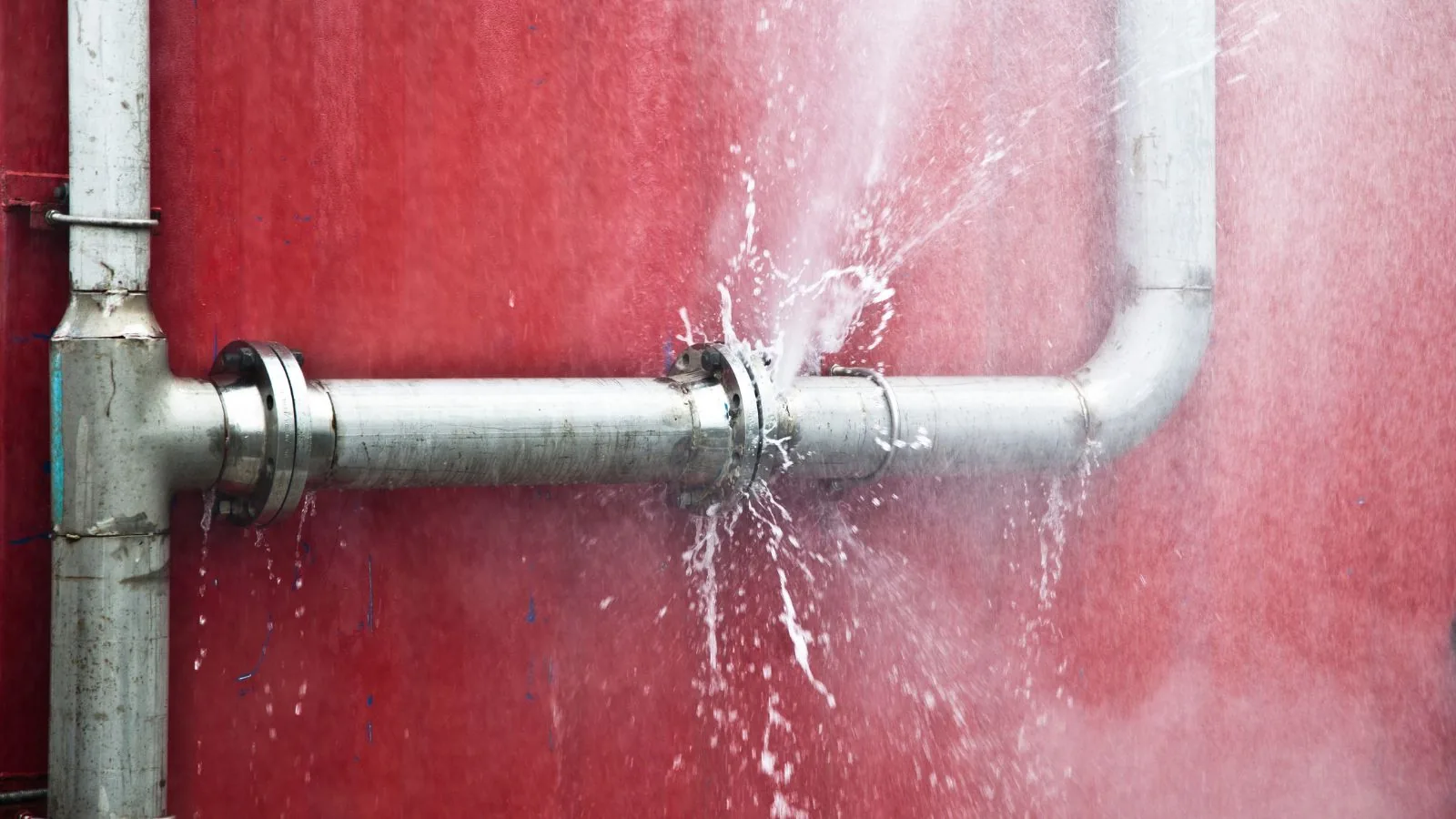
A musty smell behind a wall, a dark patch spreading on a ceiling, and then the question every owner asks: will the policy pay for this? In Shirley, NY, the honest answer is that it depends on how the water arrived and what your policy says. Mold coverage is one of the most uneven parts of a homeowners policy.
This post explains the general logic insurers tend to use, so you know which questions to ask. It cannot tell you what your policy pays, and it does not replace a conversation with your insurer. If water is still present or growth is visible right now, call (934) 223-1875 and the dispatch line will send a crew to dry and document conditions while you read your paperwork.
Sudden and accidental versus slow and gradual
Most homeowners policies are written around events. A pipe bursts, a washing machine hose lets go, a water heater fails overnight. Those are sudden and accidental, and damage from them is often covered, subject to the policy terms.
A leak that drips behind a wall for months is a different story. Insurers commonly treat long-term seepage, rot and repeated leaking as maintenance problems, and many policies exclude them. Mold that grows from that kind of slow moisture is frequently excluded as well.
The line is not always clean. A hidden leak may have started suddenly and then run unnoticed for weeks, and how an insurer reads that depends on wording, dates and evidence. That is why records matter, and why you should ask rather than assume.
How insurers tend to sort common mold situations
These are general patterns, not promises. Your own policy wording controls, and the insurer makes the decision.
| Situation | How it is often treated | What to do first |
|---|---|---|
| Mold after a pipe burst or appliance failure | Often considered with the covered water loss, sometimes under a mold limit | Stop the water, photograph everything, call your insurer, start drying |
| Mold from a slow leak left unrepaired | Often excluded as gradual damage or neglect | Fix the source, document it, ask how the wording applies |
| Mold after a flood | Flood is usually excluded, and mold that follows it often is too | Check for flood and water backup coverage before assuming |
| Mold from humidity or condensation | Often excluded as a maintenance or conditions issue | Correct the moisture, then ask your insurer |
| Mold found after buying or moving in | Depends on cause and timing, often excluded if long-standing | Record the date you found it and ask in writing |
Use the middle column as a prompt for questions, not as an answer.
When mold follows a covered loss
Many policies treat mold as a result of the original damage. If a covered burst pipe soaks a wall and growth appears later, the insurer may consider the mold part of that same loss, often under a separate cap on mold costs. That cap can be small next to the real cost of the work.
Timing carries weight here. Insurers generally expect you to limit further damage, which means stopping the source and drying the structure promptly. Wet drywall and framing left alone for days is where a covered loss can turn into a dispute, because the delay can look like neglect.
That is the practical case for starting structural drying and dehumidification early. Drying removes the moisture mold needs, and the readings and drying logs show what was done and when.
Limits and exclusions to find in your policy
Open the policy and search for the words mold, fungi, wet rot, seepage and water backup. Look for whether mold is excluded outright, covered up to a limit, or covered only when it follows a named cause. Check the deductible too, since it may apply on its own terms.
Mold needs moisture to grow, and testing and remediation follow the published ANSI/IICRC S520 standard. Questions about how mold affects a person belong to a physician, not to a policy or a contractor.
- Is mold excluded, limited, or covered after a covered cause?
- Is there a separate dollar limit for testing, removal and repair?
- Does the policy exclude continuous or repeated seepage?
- Is there a water backup endorsement attached?
- What does the policy say about your duty to protect the property after a loss?
If any wording is unclear, ask your insurer to explain it in writing. An agent can describe terms, but the written policy and the insurer's decision are what count.
What to record before cleanup begins
Take wide photos and close photos of every affected area before anything is moved or removed. Photograph the source too, such as the failed hose or cracked fitting, and keep the part if you can. Write down the date and time you found the damage.
Keep every receipt and keep a simple call log with your insurer: date, name, and what was said. Restoration crews can add moisture readings, thermal images and a written scope of work, which are the kinds of records an insurer may ask for. Ask for them in writing instead of trusting memory.
Flood, backup and mold licensing in Shirley, NY
The New York Department of Financial Services says a typical homeowners policy does not cover flood damage. Coverage for water backup and sewage may come from an endorsement, and flood generally needs a separate National Flood Insurance Program policy. If your Shirley home sits low or near water, read your policy for water backup wording now, before a loss, and ask your agent what a flood policy would add.
The department also advises filing as soon as possible after a loss and documenting damage before cleanup. New York regulations set timelines for insurers to acknowledge and answer claims, so keep your dates and call notes in one place where you can find them.
The New York State Department of Labor requires mold assessors, mold remediation contractors and mold abatement workers to be licensed. The same individual may not do both the assessment and the remediation on one project, and a mold project means more than ten square feet. Because an insurer may ask who tested and who cleaned, ask any mold company for its New York license and who handles the assessment.
Getting drying and remediation started while coverage is sorted out
Coverage questions can take days to settle, but wet materials do not wait. Starting extraction and drying while you talk to your insurer keeps damage from spreading, and it is the step most policies expect you to take. For visible growth, mold remediation begins by finding and fixing the moisture source.
The dispatch line covers Shirley and nearby Suffolk County towns, including Patchogue and Yaphank. A crew can record conditions with photos and moisture readings, and you take that paperwork to your insurer. The coverage decision stays between you and your insurer.
Frequently Asked Questions
Sometimes. Many policies cover mold only when it results from a covered event such as a sudden pipe burst, often with a limit, and exclude it when it comes from long-term leaks, humidity or neglect. Read the mold and fungi wording in your policy and ask your insurer.
Often not. Gradual seepage and neglect are commonly excluded, though wording differs between policies. Ask your insurer how it reads the policy for your situation, and fix the source quickly either way.
Flood is usually excluded from a standard homeowners policy and needs separate flood coverage. Mold that follows a flood is often excluded too. Check your policy declarations and ask about water backup and flood coverage.
Probably not on its own. New York's Department of Financial Services says a typical homeowners policy does not cover flood, and backup coverage may need an endorsement. Look up your address on the FEMA flood map, read your policy, and ask your agent whether a separate flood policy applies.
Not necessarily. Call your insurer first and photograph the damage. In New York, a licensed assessor writes the plan for mold projects over ten square feet, so ask your insurer whether it wants testing before work starts.
Generally yes, after you photograph the damage. Insurers expect reasonable steps to prevent further harm. Keep records of what was removed, and ask whether the insurer wants to see any items first.