
An estimate handed over on a clipboard in a wet kitchen is easy to sign and hard to understand later. If you are dealing with water damage in Shirley, NY, the paper matters nearly as much as the work, because it is what you, your insurer and the contractor will all point to when something changes.
There is no single required format, but good estimates share the same bones. They break the job down so a reader who was not in the house can see what happened and what is planned. This guide lists those bones, with a checklist you can hold up against any quote.
Start with the room-by-room scope
The estimate should name every affected room, not just the one where the leak started. Water travels under floors, into wall cavities and across ceilings, so the written scope should list the areas that were measured wet, with approximate dimensions of each.
Look for notes on where moisture readings were taken and what they showed. Without that, you cannot tell whether the proposed work matches the damage. A vague line that says water damage in house tells you very little.
Water category and class belong on the page
Industry practice, described in the ANSI/IICRC S500 standard, sorts water into categories by how clean it is at the source, and sorts the loss into classes by how much material is wet. Category affects what can be dried in place and what must be removed. Ask any company whether its crews work to that standard.
A good estimate states the category and class it assumed, and says what happens if the finding changes. Water that starts clean can turn contaminated if it sits, so the document should explain how a change would be handled.
Equipment, days and monitoring
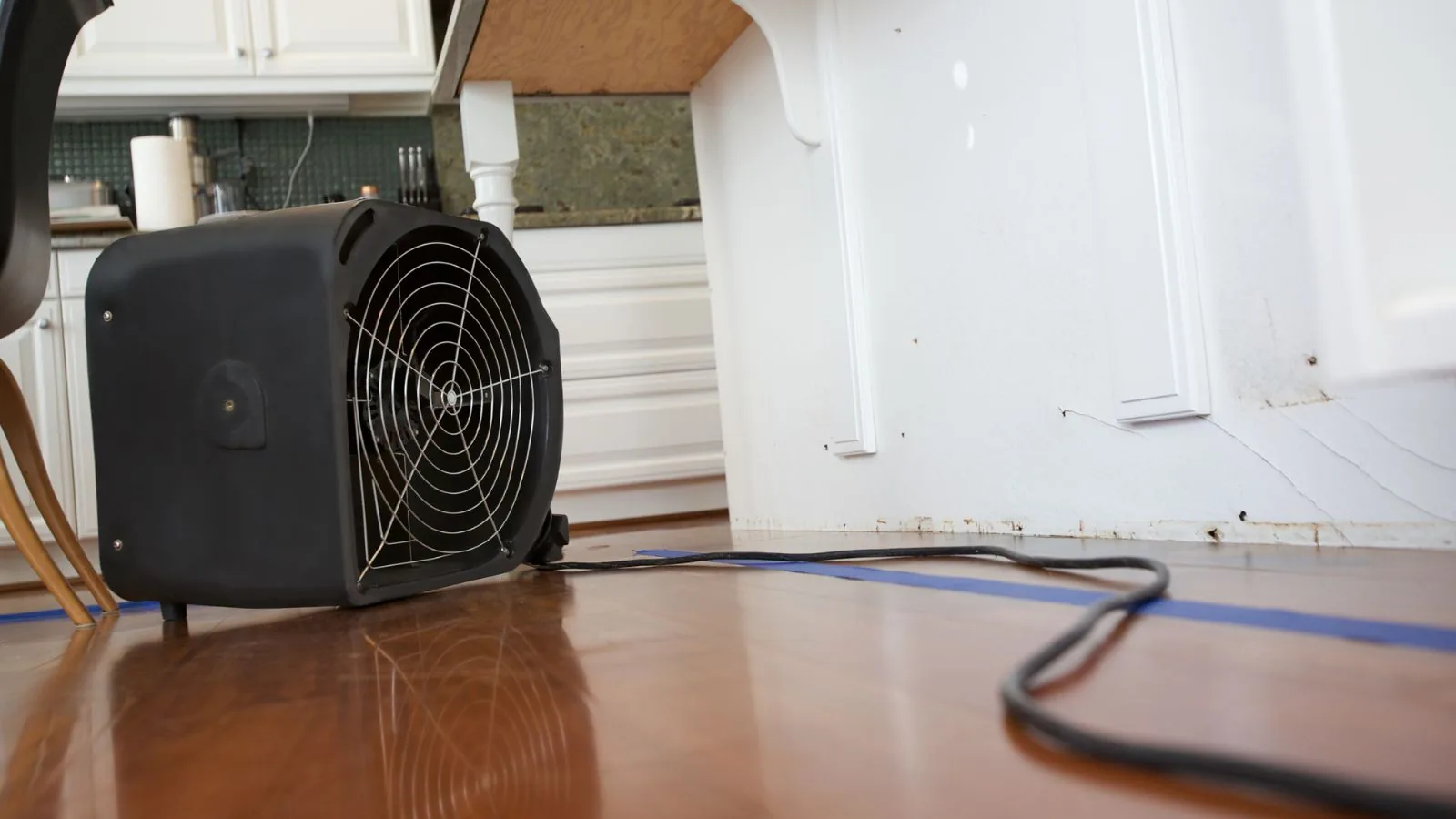
Drying is billed in equipment and time, so you should see the types and numbers listed: air movers, dehumidifiers, air scrubbers, and any specialty drying systems. Each should show a count and an expected number of days. See structural drying and dehumidification for how these pieces work together.
The estimate should also say how often the crew will return to check moisture and what readings count as dry. Drying is not finished because the surface feels dry. It is finished when readings reach the dry standard for that material, and the logs prove it.
Water removal comes first, and should be listed separately
If there is standing water, the first line item is usually removal. The estimate should state the method, such as truck-mounted or portable extraction units, and the areas covered. How the crew handles this stage is covered under water extraction.
Extraction is quick compared with drying, so a quote that lumps the two together may hide what you are paying for. Separate lines let you compare bids fairly.
Checklist: what to look for in every estimate
Hold the quote beside this table and mark what is present, missing or unclear. Missing items are not always a problem, but they are reasons to ask a question.
| Item | What good looks like | Question if missing |
|---|---|---|
| Scope by room | Each wet room named with approximate size | Which rooms are included? |
| Water category and class | Stated, with a note on change | What was assumed? |
| Moisture readings | Locations and values recorded | Where were readings taken? |
| Equipment and days | Types, counts and expected days | How long will drying run? |
| Contents | Move, clean, pack-out or dispose, listed | What happens to our belongings? |
| Demolition | Materials to be removed, by room | What gets cut out and why? |
| Mitigation vs rebuild | Two clearly separate sections | Where does drying end and repair begin? |
| Change handling | How added work is approved | How are surprises handled? |
| Documentation | Photos, logs, final readings supplied | What records will we get? |
Keep the rebuild separate from the drying
Mitigation stops the damage. Rebuild puts the house back together with new drywall, flooring, trim and paint. A good estimate keeps them apart, because the rebuild cannot sensibly be priced until the structure is confirmed dry and demolition is complete.
If you see finish work priced on day one, ask what it is based on. It may be a rough allowance, and the document should say so. When a contractor prices repairs later, the earlier mitigation lines show what was already removed.
How changes should be handled
Every wet building holds surprises. A wall may be wetter inside than it looked, or a hidden section of subfloor may need to come out. A trustworthy estimate says how additional work is requested, who approves it, and whether you get a written change order before the work starts.
Ask for the answer in writing. A promise made at the door fades quickly, and you will want a paper trail if your insurer asks why the scope grew.
Build your claim folder before cleanup starts
The New York Department of Financial Services says to file as soon as possible after a loss and to document damage before cleanup. So walk each wet room with your phone before furniture is moved or materials are pulled out, then keep the estimate, photos and moisture logs together in one folder.
Flood damage is not covered by a typical homeowners policy. Water backup and sewage coverage may come through an endorsement, and flood through a separate National Flood Insurance Program policy, so check your policy before you rely on any estimate to describe what is covered. Households in Yaphank or Patchogue should use the same folder system.
What an estimate cannot tell you
An estimate is a scope and a price basis, not a promise of what your insurer will pay. Costs depend on the size of the area, the water category, how long the water sat, the materials involved and what the crew finds once walls are open. Ask for the drivers behind the number, and ask what would make it go up or down.
Frequently Asked Questions
It should list rooms in scope, water category and class, moisture readings, equipment and days, contents handling, demolition, a separate rebuild scope, change handling and the documentation you will receive.
Drying and demolition have to finish before rebuild work can be scoped properly. Separating them also helps an insurer see which work was emergency stabilization.
Yes, because hidden moisture is often found once materials are opened. A good estimate says how changes are approved and documented before extra work begins.
It depends on the materials, the amount of water and the weather. Ask the company to list expected days per area and what readings will show the job is done.
Each insurer sets its own rules. A clear estimate with photos, moisture readings and a written scope gives the insurer what it commonly asks for, but check your policy and ask your insurer.
Not always, since urgent extraction may start first. Ask for a written scope and authorization as soon as the situation is stable.
Ask whether the scope notes flood as the cause, because flood is usually excluded from standard homeowners coverage. Look up your address on the FEMA flood map, and ask the Town of Brookhaven Building Division what applies.