
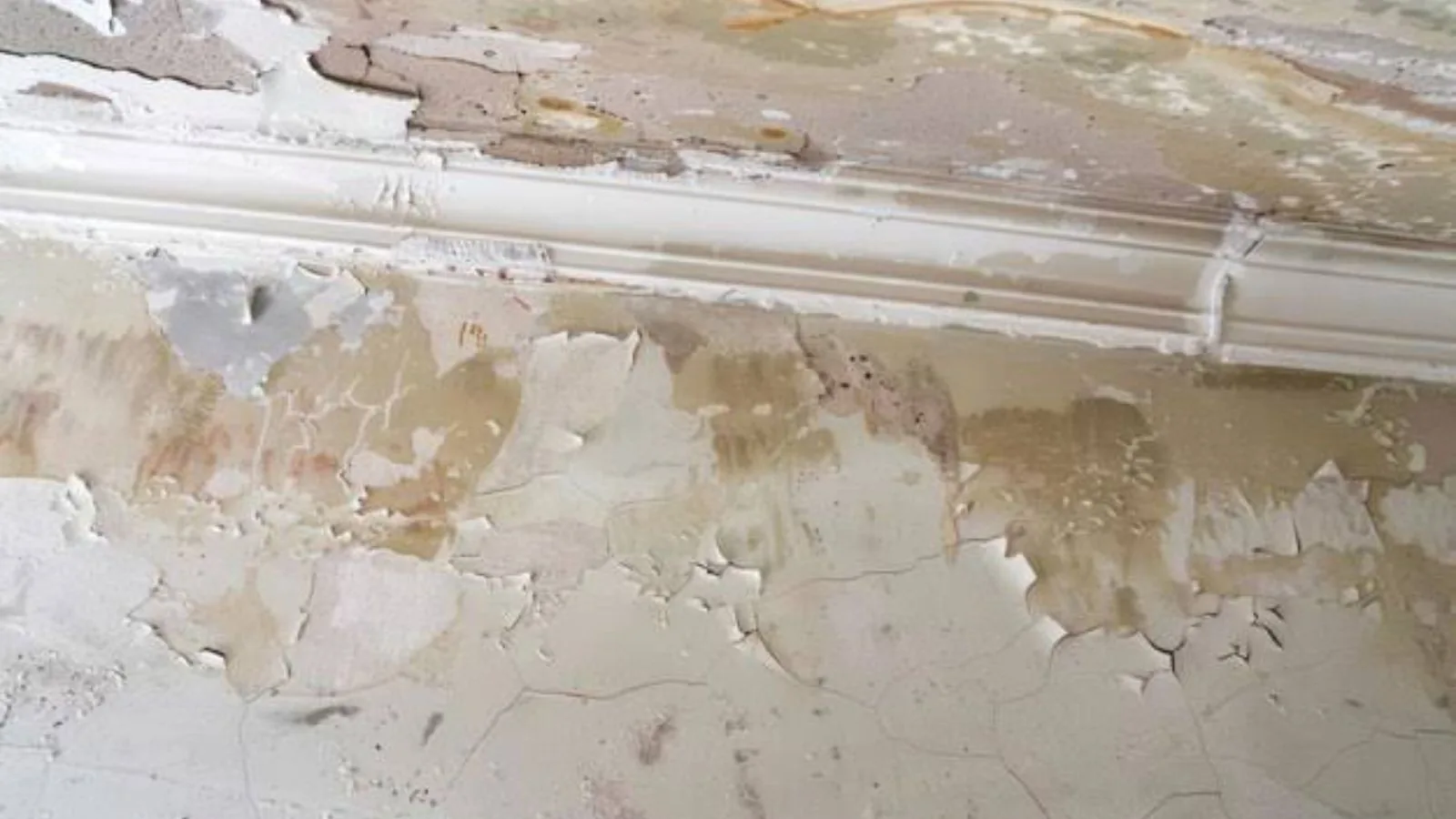
A wet house in Shirley, NY is not a mold problem yet. It becomes one when building materials stay damp long enough for growth to take hold, and that window closes sooner than most people expect. Every day spent deciding what to do is a day the materials spend wet.
This guide explains how moisture turns into mold, where it hides, and what to do first. It also marks the point where a licensed professional should take over.
Why damp materials are the real starting point
Mold needs three things: spores, a food source, and moisture. Spores are already floating in indoor air. Drywall paper, wood framing, carpet backing and ordinary dust are all food. Water is the only one of the three you can realistically take away, which is why every industry standard for this work begins with drying.
Materials hold water differently. Drywall and insulation act like sponges and let go of moisture slowly. Solid framing lumber soaks water in deep and gives it back over a long stretch, well after the surface feels dry to the hand.
That gap between feeling dry and being dry is behind most repeat problems. A moisture meter reads water inside the material, and a thermal imaging camera shows cool, wet zones behind a finished wall.
Where growth starts when nobody is looking
The stain you can see is rarely where trouble begins. Water runs down along studs, soaks into the bottom plate of a wall, and settles under flooring where no air moves. Growth tends to show first behind baseboards, under carpet pad, at the low edge of drywall, and on the back panels of cabinets.
- A musty smell that comes back on humid days
- Paint that bubbles, peels, or shows ringed stains
- Baseboards that feel soft or look swollen at the bottom
- Carpet that still feels cool and damp days after the spill
- Drywall seams or wallpaper edges that lift away from the wall
A lingering musty odor in a room that once got wet is a reason to look for hidden moisture, even when nothing is visible. It is a prompt to investigate, not a conclusion about what is growing.
The first days: a sensible order of operations
The sequence matters more than speed in any single step. Do these in order and you give the structure its best chance of drying out clean.
Stop the source
Shut off the supply or close the opening where water entered. Nothing else you do will hold while water is still arriving.
Photograph before you move anything
Take wide shots and close shots of every wet surface and damaged item. An insurer may ask for them later.
Get the water out and the air moving
Standing water and soaked porous materials come first. Open windows and a box fan rarely reach water trapped inside a wall, which is the problem structural drying and dehumidification exists to solve.
Sort what can dry from what cannot
Carpet pad, soaked insulation and swollen drywall are often removed rather than dried. Ask the crew to show moisture readings so the decision rests on numbers.
Confirm the dry-down
A room is dry when readings return to the normal range for that material, not when it feels fine.
What Shirley's damp winters mean for a wet wall
Yearly precipitation in the NOAA normals for Islip, the closest station, comes to roughly 46 inches. Islip is not Shirley, so read that as a regional guide and not a local measurement. The practical point is that you cannot count on the weather to dry out a wet room for you, so an indoor water event deserves active drying.
Those same normals list a January average low of 24.6 F and about 98 days a year with lows at or below freezing. Freezing nights are common enough that exposed or unheated plumbing needs protection, and a pipe that splits inside a wall can soak the framing before anyone sees a drip. If a stain appears after a cold snap, ask for a moisture reading on that wall before the stain turns into a smell.
Why paint, bleach and sealer make things worse
Paint over a stain locks moisture in and hides a problem you still have. Household cleaners can lighten the surface color of a patch but do nothing for the damp material underneath. The water is the cause, and neither product removes it.
When the job moves past the homeowner
A small patch on a hard surface is a different matter from growth on drywall, in insulation, across a large area, or in a spot that keeps coming back. Those cases call for mold remediation, which is a defined process of containment, removal of affected materials, and cleaning, followed by a check that the moisture problem is fixed. Published practice for that work is ANSI/IICRC S520, and you can ask any company whether its crews work to it.
Ask about licensing too, because New York regulates this kind of work. A company that cannot explain its process, or offers to simply spray the area, has not answered your question. For health concerns, ask a physician.
The dispatch line sends licensed and insured restoration professionals, and the process is the same across nearby communities. Crews working in Mastic Beach and in Yaphank begin with the source, then map moisture, then dry, then verify. Distance from the bay changes the likely cause of the water, not the order of the work.
A quick way to decide your next step
Use this as a rough sorting tool. When two rows seem to fit, take the more serious one.
| What you see | What it suggests | Sensible next step |
|---|---|---|
| Wet floor, dried within a short time, no smell | Surface moisture only | Photograph it, fix the source, watch the area |
| Damp carpet or baseboard after a leak | Water has moved below the surface | Ask for moisture readings and active drying |
| Musty smell, nothing visible | Hidden moisture is likely | Moisture meter and thermal imaging check |
| Visible growth on drywall or a large area | Established growth | Call for a mold assessment and remediation plan |
| Stain that returns after cleaning | The water source is still active | Find and fix the source before any cleanup |
Frequently Asked Questions
Yes, if the wet materials stay damp. A small leak that is fixed and dried promptly is a very different case from a slow one that keeps feeding a wall. If you are unsure which one you had, a moisture reading tells you more than the stain does.
You cannot tell by touch. A pin or pinless moisture meter reads moisture inside drywall and framing, and a thermal imaging camera helps locate cool, wet areas behind the surface. Ask the crew for readings before and after drying.
Often it is not, especially when water has reached wall cavities, insulation or the layer under flooring. Surface air movement does not pull moisture out of trapped spaces. The decision-level answer is on the page for structural drying, where the equipment and process are explained.
The NOAA normals for the Islip airport station show about 46 inches of precipitation a year, but that is a regional number and says nothing about your house. What matters indoors is whether water got in, how long materials stayed wet, and whether the space can dry. If you have had a leak or a flooded room, get a reading rather than relying on the climate.
A musty smell is a reason to look for hidden moisture first. Sampling and assessment are done by a licensed mold assessor, who can also write a plan if remediation is needed. For any health question, speak with a physician.
Check your policy and ask your insurer. Policies treat mold differently from one to the next. Mold that follows a sudden water event is more likely to be addressed than mold from a long leak, so ask your insurer, and bring photos, readings and a written scope.
Call (934) 223-1875. The dispatch line is open 24/7 and sends licensed and insured restoration professionals to Shirley and nearby Suffolk County towns.