
A phone dropped in a sink is a small problem. A basement with a router, a television and a power strip sitting in two inches of water is a different one. In Shirley, NY, the first question after any water event is not whether the gadget can be saved. It is whether anyone can safely reach it.
This post walks through that question first, then the device itself. You will see when to unplug, when to leave everything alone and call for help, which popular fixes do not work, and what you should write down before anything is moved.
Electrical safety with water
Never touch a plugged-in device, cord or outlet while you are standing in water or on a wet floor. Do not enter a room with standing water if any outlet, appliance or extension cord could be live.
Turn off power at the main panel only if the panel is dry, you are standing on a dry surface, and you can reach it without crossing water. If the panel is wet, sparking, or surrounded by water, stay out and call your electric utility, the fire department or a licensed electrician.
Why water ruins circuits so quickly
Clean water is a poor conductor on its own. The trouble starts when it picks up dust, salt and residue and lands on a powered circuit board. Current then takes paths the designer never intended, and tiny traces can burn or corrode within hours.
Even a device that seems fine after it dries can fail weeks later as corrosion builds on contacts. Saltwater, floodwater and anything with sewage in it do the most harm, because they leave conductive film behind that is hard to remove.
Power first, device second
If it is safe to reach the panel, shut off the circuits serving wet areas. If you cannot, leave the power alone and stay out of the room. A wet outlet or panel should be checked by a licensed electrician before anyone turns it back on, even if it looks dry.
Once the power is confirmed off and you can reach the device from dry ground, unplug it and remove the battery if it is removable. Do not press the power button to see if it still works. A test run can turn a recoverable device into a dead one.
Decision table: first step by device type
Use this as a starting point. If the room itself is unsafe, the answer for every row is to wait and call for help.
| Device | First step | Avoid |
|---|---|---|
| Phone or tablet | Power off, remove case, SIM and card, pat dry | Charging it, shaking it, using a hair dryer |
| Laptop | Unplug, shut down, remove battery if possible, open and tilt | Pressing power, closing the lid |
| TV or monitor | Unplug only if the floor is dry, stand upright | Switching it on, tilting it face down |
| Game console or router | Unplug, wipe the outside, let air circulate | Stacking it, running it to test |
| Power strip or extension cord | Do not touch if wet, have it replaced | Reusing after drying |
| Desktop PC or hard drive | Unplug, remove the drive, keep it wet in a sealed bag if muddy | Opening the drive yourself |
| Large appliance | Leave to a professional, power down at the breaker if safe | Plugging it back in |
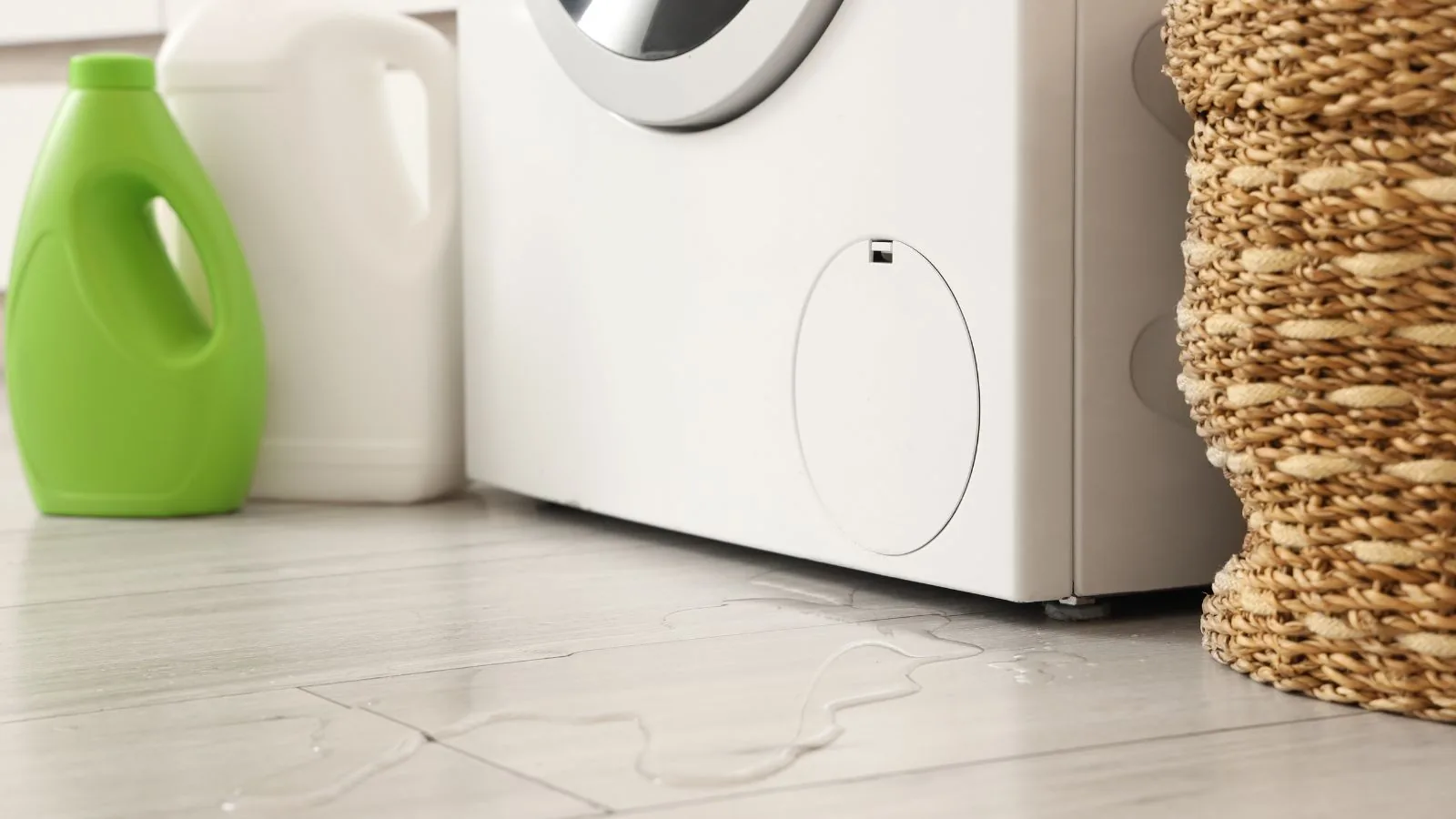
For a wet washer, refrigerator or other large appliance, the electrical question is bigger than the device. The page on appliance leak water damage covers what to do when the leak comes from the machine itself.
The rice myth, and what actually helps
Rice does not pull enough moisture out of a phone to matter. It can leave dust and starch in ports, and it delays the real step, which is to power down and get the device open and dry. Silica gel packets are slightly better but still no match for a professional cleaning.
What helps is time and airflow. Take off cases and open any door or tray that opens without tools. Let it sit in a dry, well-ventilated spot for a day or more, and do not apply heat. Then a technician can test it.
What professionals can do
A repair shop or electronics restoration service can open a device, inspect the board under magnification, and clean it with an ultrasonic bath and an approved solvent. That removes the residue that drives corrosion, which air drying alone never does.
For data, ask about recovery from drives and phones before you let anyone replace parts. If a backup exists, a replacement may be the cheaper choice. If there is no backup, tell the shop that data matters most and stop trying to power it on yourself.
A restoration crew treating the structure is a different job. Crews handling flood damage work on the building, air and contents drying, and can help you sort what is worth sending out. Wet cabling inside walls and floors is a job for a licensed electrician, not a drying crew.
Document damage before cleanup in Shirley, NY
New York's Department of Financial Services advises homeowners to file claims as soon as possible and to document damage before cleanup. For electronics, that means photographing each device where it sat, its model and serial number, and the water line on the wall or floor, before anything is bagged or thrown out.
A typical homeowners policy does not cover flood damage, so read your policy before a loss, and ask your agent whether a sudden water event covers contents. If you live in Patchogue or Yaphank and read this after a loss, the same advice holds: photograph first, throw away nothing, and keep receipts.
Back up before it happens
Most of the real loss after electronics get wet is data, not hardware. A phone can be replaced in a day, while ten years of family video cannot. Turn on automatic cloud backup for phones and tablets, and copy important files from computers to a drive that lives in a different room.
Keep devices off the floor in basements and ground-floor rooms. Plug sensitive electronics into outlets high on the wall, and store spare drives and chargers on shelves instead of in low cabinets.
Frequently Asked Questions
Only if the power is off at the panel and you can reach the device without standing in water. If you cannot do that safely, leave it and call your utility, the fire department or a licensed electrician.
No. Rice does little to remove moisture and can leave dust in ports. Power the phone off, remove the case and card, and bring it to a repair shop as soon as you can.
Do not. Power on a wet circuit board can cause a short and permanent damage. Let a technician test it after it has been opened, cleaned and dried.
Photograph each device in place, note the make, model and serial number, and keep receipts and any damaged items until your insurer says otherwise. Ask your insurer what proof it needs.
Not until a licensed electrician has checked them. Wet outlets, cords and panels can look dry and still be unsafe.
A typical homeowners policy does not cover flood damage, and flood coverage comes from a separate National Flood Insurance Program policy. Check your policy and ask your agent what applies to contents.
Call your electric utility or an electrician if there is any doubt about power. For the water, call (934) 223-1875 and ask about restoration professionals for the structure.